
A custom neodymium magnet RFQ should do more than list length, width, and grade. The supplier must understand how the part works inside the product, which conditions can demagnetize or corrode it, how it will be assembled, and how performance will be accepted. Missing inputs lead to conservative pricing, unnecessary rework, or a magnet that meets the drawing but not the application.
The good news is that the first RFQ does not need to contain a finished magnet design. A capable engineering partner can work from the functional target, space envelope, environment, and production plan. The checklist below shows which information creates the fastest path from concept to a reliable production part.
Best practice: State the function first, then the preferred magnet specification. This allows the manufacturer to identify design risks and propose cost-effective alternatives without changing the requirement.
1. Define the Magnet’s Job in the Assembly
Begin with one sentence that describes what the magnet must do. Examples include holding a 12 kg access panel, producing a target motor torque, triggering a Hall sensor across a 4 mm gap, coupling torque through a stainless barrier, or maintaining adhesion on a curved steel wall.
Then identify the load direction and duty cycle. Holding force, shear force, torque, repulsion, field at distance, and dynamic motor performance require different design approaches. If the magnet is part of a larger magnetic circuit, share the surrounding steel, air gap, coil, and nonmagnetic components.
2. Provide Geometry and Available Space
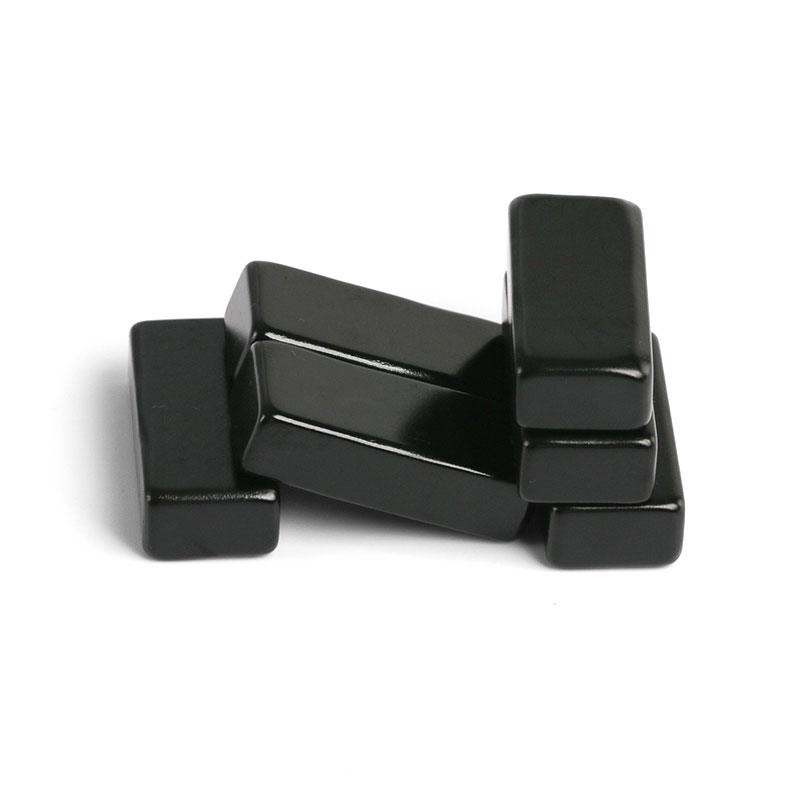
Send a 2D drawing and, when possible, a STEP model of the surrounding assembly. Mark critical dimensions and reference surfaces. Common sintered NdFeB shapes include discs, rings, blocks, cylinders, arc segments, trapezoids, and machined special profiles.
Sintered NdFeB is hard and brittle. Thin walls, sharp internal corners, deep narrow holes, and extreme aspect ratios can increase machining breakage and inspection difficulty. A small geometry change may improve yield without affecting the magnetic circuit. Ask for a manufacturability review before finalizing tooling.
3. Select Grade From Temperature and Demagnetization Risk
Grade labels such as N35 and N52 indicate an energy-product family, but the suffix is equally important when the magnet operates at elevated temperature or against a demagnetizing field. The correct grade depends on magnet shape, operating point, air gap, nearby magnets, current in adjacent coils, thermal path, and maximum temperature.
Provide three temperatures: normal operating temperature, expected continuous maximum, and short-duration peak. Also describe any bake, coating-cure, overmolding, welding, sterilization, or transport exposure. The supplier can then evaluate reversible temperature loss and irreversible demagnetization margin.
For more background, see Understanding Magnet Grades: From N35 to N52 and Beyond.
4. Specify Magnetization Direction and Pole Pattern
Two magnets with the same shape and grade can behave completely differently when magnetized in different directions. A disc may be axially or diametrically magnetized. A ring may have two poles, multiple poles, radial orientation, or a custom pattern. Arc segments must be oriented correctly relative to the motor rotor.
Show north and south poles on the drawing or include a simple application sketch. If the assembly needs alternating poles, a Halbach arrangement, skewed poles, or a defined angular position, state the indexing tolerance and inspection method. Magnetization fixtures can be a significant part of tooling and should be considered early.
5. Match the Coating to the Environment and Process
NdFeB contains reactive material and usually needs a protective coating. Common options include nickel-based systems, epoxy, zinc, and specialized multilayer coatings. The correct choice depends on humidity, salt, chemicals, temperature, abrasion, appearance, electrical behavior, adhesive compatibility, and handling.
Tell the supplier whether the magnet will be bonded, press-fit, overmolded, exposed outdoors, washed, sterilized, or immersed. Coating thickness becomes part of the dimensional stack and can affect tight pockets or air gaps. Read Why Coating Matters for a deeper comparison.
6. Apply Tolerances Where They Protect Function
Tight tolerances raise machining and inspection cost, especially on small, brittle parts. Identify the dimensions that locate the magnet, control the air gap, set the bondline, or affect rotor balance. Allow practical tolerances on noncritical features.
Also define edge condition. Chips can start at sharp corners during handling and assembly, so a controlled chamfer or edge break may improve reliability. If the magnet will be glued into a pocket, specify the adhesive gap and venting strategy instead of forcing a zero-clearance fit.
7. Define Magnetic Acceptance Criteria
Do not rely only on the grade label. Choose a finished-part test that correlates with product function. Options include:
- Surface flux density at a defined point
- Flux at a defined air gap
- Magnetic moment or total flux
- Pull force on a controlled steel fixture
- Torque in a coupling fixture
- Back-EMF or motor performance for a rotor assembly
- Pole position and magnetization-direction verification
State the fixture, target material, gap, probe, temperature, sample plan, and acceptable range. Our guide to gauss versus pull force explains why these metrics cannot be substituted for one another.
8. Include Mechanical Integration and Assembly Details
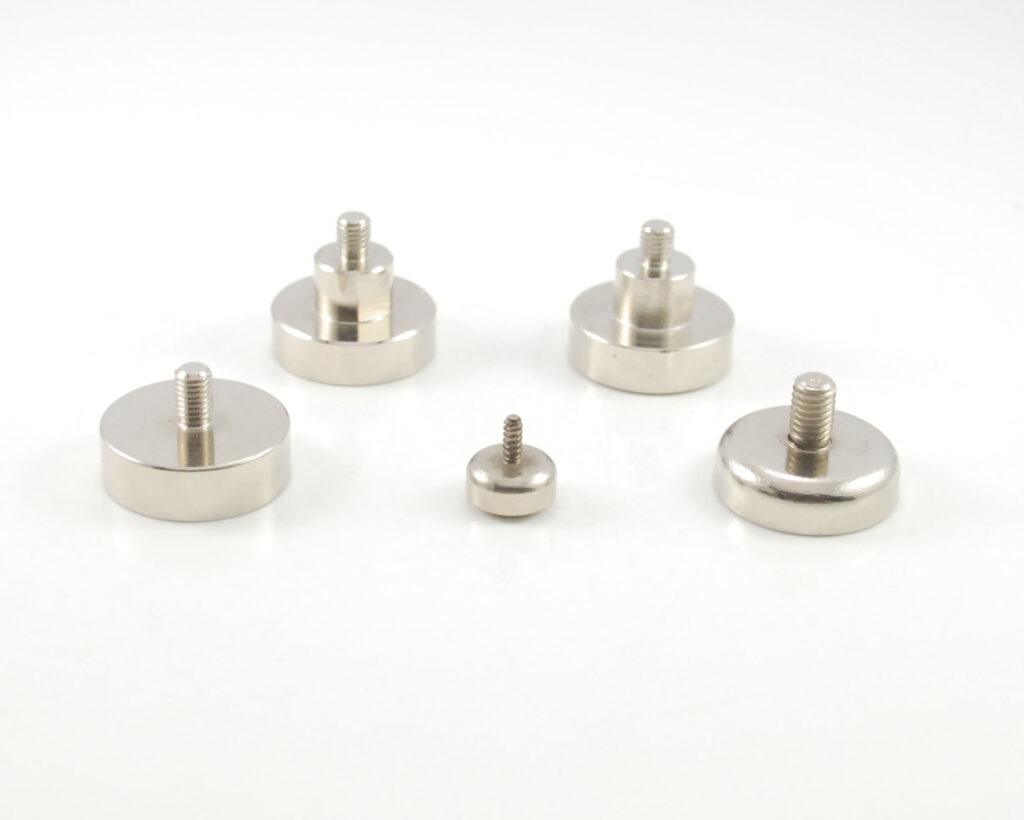
A magnet may be bonded, captured, press-fit, molded, screwed through a countersunk hole, or integrated into a steel housing. Share the adhesive, housing material, curing process, interference, assembly temperature, and expected mechanical shock.
For strong magnets, production assembly can require polarity-control fixtures, spacers, nonmagnetic tools, controlled insertion, and operator protection. Guande Magnet can supply individual magnets or develop a complete magnetic assembly with steel components, hubs, shafts, adhesives, and final functional testing.
9. State Quantity, Ramp Plan, and Commercial Priorities
Quote quantity affects the production route. Prototype parts may be machined from available material, while serial production may justify a dedicated alloy batch, pressing tooling, magnetizing fixture, automated assembly, or a custom inspection gauge.
Provide sample quantity, pilot quantity, annual volume, order frequency, program life, target start of production, and expected growth. If cost, size, temperature, corrosion resistance, or lead time is the top priority, rank those objectives. Engineering trade-offs become faster when the decision criteria are explicit.
10. Agree on Documentation and Change Control
List the documents required with samples and production orders: dimensional report, magnetic test data, coating report, material certificate, control plan, inspection record, or customer-specific forms. Ask how raw-material batches, magnetization, coating lots, and production changes are traced.
For repeat programs, define which changes require approval. Material grade, alloy route, coating supplier, tooling, manufacturing location, and inspection method can all affect the validated product.
Copy-and-Paste RFQ Checklist
- Application and functional target
- 2D drawing and 3D assembly model
- Preferred magnet shape and dimensions
- Grade or required magnetic performance
- Operating, maximum, and peak temperature
- Magnetization direction and pole pattern
- Coating and exposure environment
- Critical tolerances and edge condition
- Air gap, steel return path, and neighboring components
- Mechanical retention and assembly process
- Magnetic and dimensional acceptance methods
- Sample, pilot, and annual quantities
- Target schedule and start of production
- Required reports, traceability, and change control
- Priority order: performance, cost, size, temperature, corrosion, lead time
From RFQ to a Production-Ready Magnetic Solution
Guande Magnet has focused on sintered NdFeB magnets and complex magnetic assemblies since 2011. Our published process combines material and magnetic-circuit expertise with pressing, sintering, machining, coating, magnetization, final inspection, and prototype-to-production support. The objective is not simply to manufacture the drawing; it is to protect performance, cost, and manufacturability across the complete program.
Review our sintered NdFeB magnet capabilities, engineering services, and application portfolio. When you are ready, upload your drawing or describe the functional target. Our engineering team will review the magnetic, mechanical, environmental, and production requirements before quotation.
Frequently Asked Questions
Do I need a finished drawing to request a custom magnet quote?
No. A concept model, available space, functional target, temperature, environment, and estimated quantity are enough to begin an engineering discussion.
What is the minimum order quantity for custom neodymium magnets?
It depends on material batch size, geometry, tooling, coating, magnetization, and inspection. Prototype quantities may use a different production route from serial orders, so request both sample and production pricing.
Can an N52 magnet replace a lower grade without redesign?
Not automatically. Higher remanence does not guarantee sufficient coercivity, temperature margin, or better system performance. The magnetic circuit should be checked before changing grade.
Can the supplier assemble magnets into steel or plastic components?
Yes, when assembly requirements are defined. Provide housing materials, adhesives, tolerances, polarity sequence, curing conditions, and final functional tests so the complete process can be designed and quoted.