
Magnetic Assemblies / Custom Assemblies
Custom Magnetic Assemblies: From Magnetic Target to Production Interface
Custom magnetic assemblies combine magnets with steel, stainless parts, polymers, adhesives, shafts, housings or electronics. The objective is a repeatable functional module with defined magnetic output, mechanical interfaces, environmental protection and inspection.
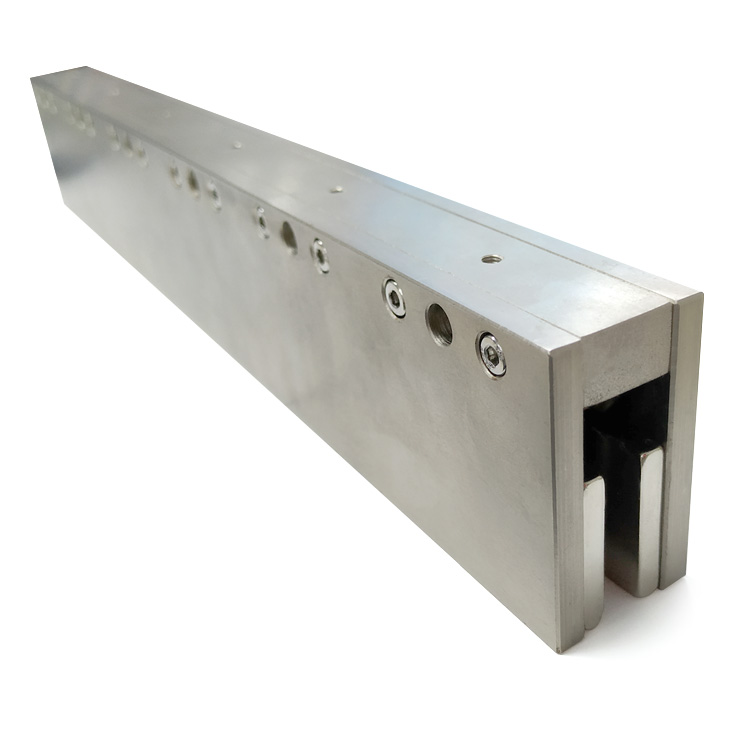
Geometry and Dimension Definition
Use functional datums and define the magnetization reference on the drawing. The table below provides the minimum geometry information for a practical manufacturing review.
| Parameter | How to define it | Why it matters |
|---|---|---|
| Assembly envelope | Overall datums and interface dimensions | Connects the module to the customer product |
| Magnetic target | Force, flux, field map, torque or sensor output | Defines functional acceptance |
| Mechanical interfaces | Threads, shafts, fits, holes and locating features | Controls integration and load transfer |
| Environment | Temperature, corrosion, vibration and cleanliness | Determines materials, coating and process |
Design Considerations
System-level magnetic design
Magnet grade, steel saturation, air gap and geometry should be optimized together.
Joining process
Adhesive, overmolding, welding or mechanical retention must match loads, temperature and production volume.
Inspection strategy
Measure the output the application needs, supported by dimensional and process controls.
Manufacturing and Assembly Notes
- Tolerance stack-up across multiple materials can shift the air gap.
- Adhesive cure and surface preparation affect long-term reliability.
- Magnet handling forces complicate automated assembly.
- A prototype process may not scale without dedicated fixtures and error-proofing.
Typical Applications
Sensor modules
Magnet, carrier and orientation features supplied as one unit.
Actuators and latches
Integrated magnetic circuits with controlled force.
Rotating systems
Rotor, coupling and encoder assemblies.
Industrial tools
Holding, separation and worksite problem-solving modules.
Engineering Questions
What is the best starting information?
A sketch, sample or drawing plus the magnetic target, environment, interfaces and expected volume.
Can you optimize an existing assembly?
Yes. Air gap, material, steel path, joining and tolerance stack can be reviewed together.
How should prototypes be validated?
Agree functional measurements, sample size and failure criteria before prototype build.
What changes when moving to volume production?
Fixtures, process capability, traceability, incoming controls and packaging become part of the design.
For a focused design review, share your drawing, operating temperature, air gap, target magnetic performance and annual volume through our enquiry page. You can also return to Magnetic Assemblies for material-level guidance.