
Sintered NdFeB Magnets
Custom grades, precision machining and magnetization support—from first sample to repeat production.
Standard Shapes. Drawing-Based Solutions.
Choose a common geometry or send a drawing for machining and magnetization review.
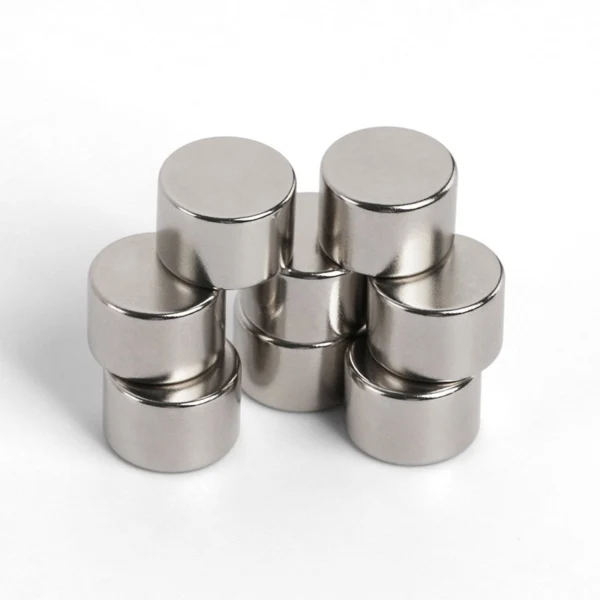 Disc MagnetsAxial or diametrical magnetization
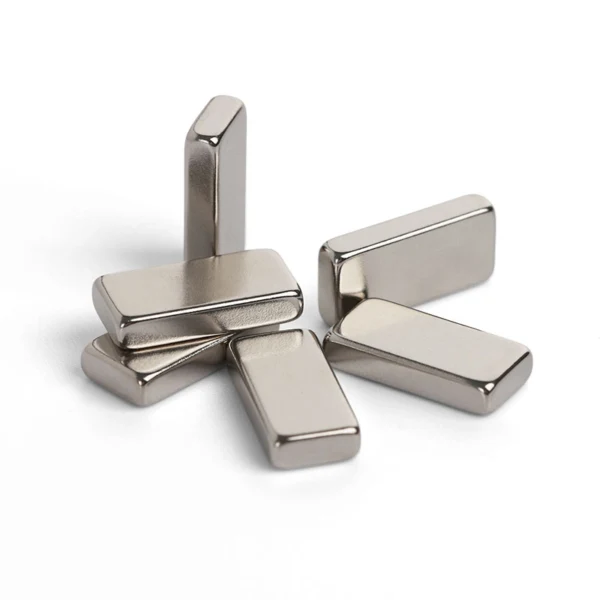 Block MagnetsGround faces, chamfers and slots
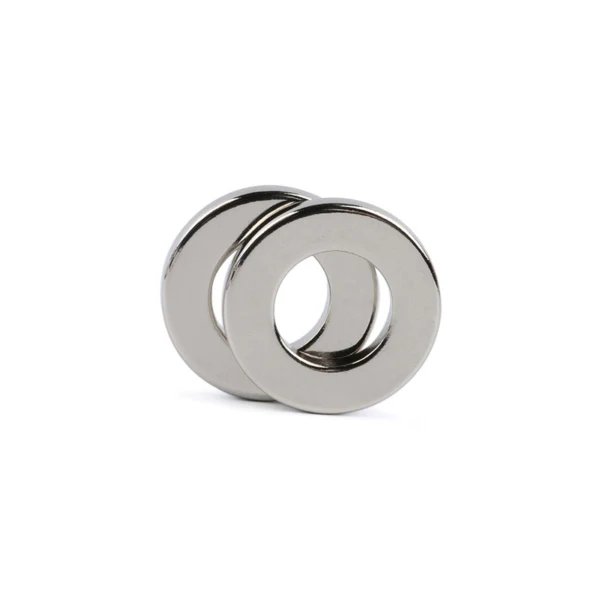 Ring MagnetsAxial, diametrical or multipole
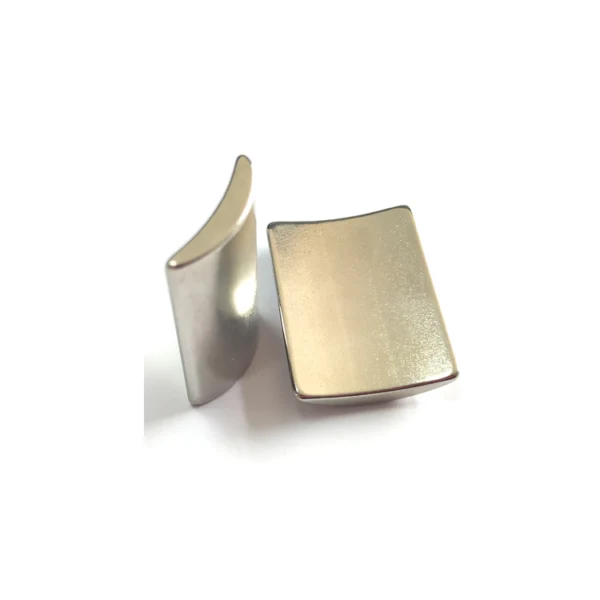 Arc MagnetsMotor and rotor applications
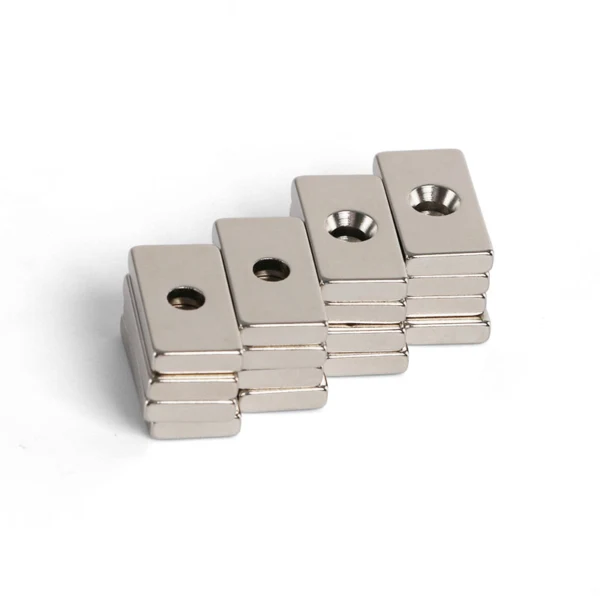 Countersunk MagnetsAssembly-ready geometry
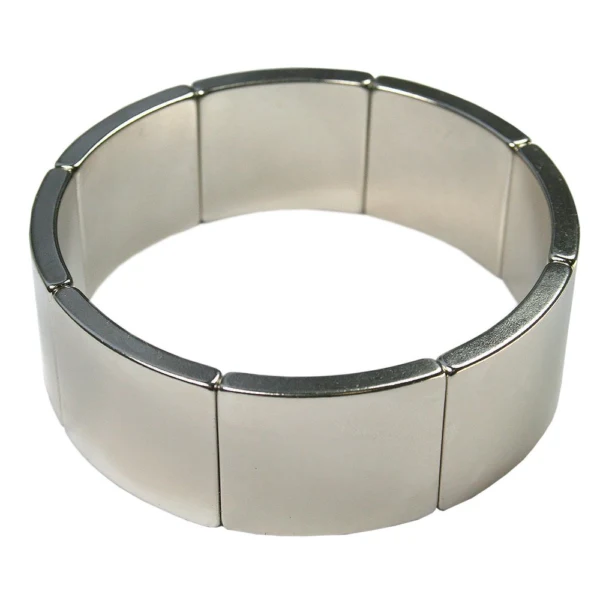 Segment MagnetsMatched sets and polarity control
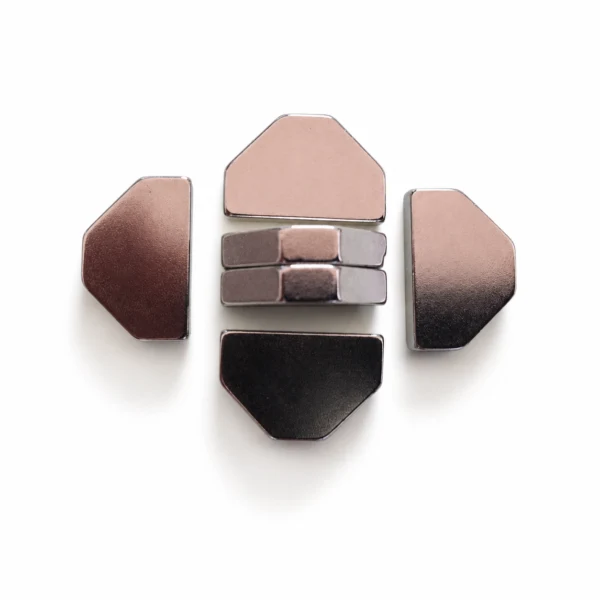 Custom ShapesDrawing-based machining review
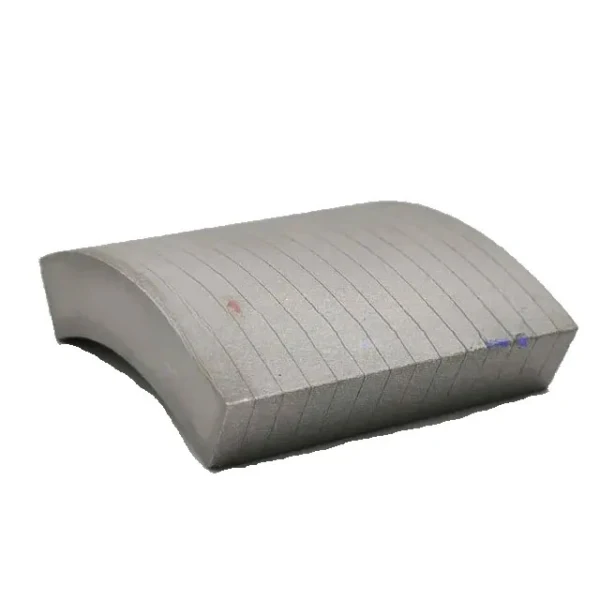 Laminated MagnetReduced eddy-current loss for high-speed motors
Why Engineering Teams Choose Guande
We connect material selection, manufacturability review and process control so a drawing can move from first sample to stable repeat production with fewer technical risks.
Precision Tolerances
Ground dimensions, parallelism and critical geometry are reviewed against shape, size, brittleness and the selected inspection method.
Application-Matched Coatings
Ni-Cu-Ni, zinc, epoxy, phosphating, passivation and special systems are selected around humidity, corrosion, bonding and assembly needs.
Fast Sampling & DFM Support
Drawing review, magnetization planning and prototype validation help confirm the design and production specification before volume release.
Tolerance, coating and sampling targets are confirmed against the final geometry, application environment and inspection agreement.
Technical Specifications & Material Grades
Compare reference magnetic properties, then review temperature, coating, tolerance and magnetization requirements with our engineering team before final grade selection.
| Grade | Br (kGs) | Br (Tesla) | Hcj (kOe) | Hcj (kA/m) | Hcb (kOe) | Hcb (kA/m) | (BH)max (MGOe) | (BH)max (kJ/m3) | Density ρ (g/cm3) | Curie Temp Tc (℃) | Max Temp Tw (℃) | Rec Permeability μrec |
|---|---|---|---|---|---|---|---|---|---|---|---|---|
| N35 | 11.7~12.2 | 1.17~1.22 | 12 | 955 | 10.9 | 867 | 33~36 | 263~287 | 7.45 | 310 | 80 | 1.05 |
| N38 | 12.2~12.5 | 1.22~1.25 | 12 | 955 | 11.3 | 899 | 36~39 | 287~310 | 7.5 | 320 | 80 | 1.05 |
| N40 | 12.5~12.8 | 1.25~1.28 | 12 | 955 | 11.6 | 923 | 38~41 | 302~326 | 7.5 | 320 | 80 | 1.05 |
| N42 | 12.8~13.2 | 1.28~1.32 | 12 | 955 | 11.6 | 923 | 40~43 | 318~342 | 7.5 | 320 | 80 | 1.05 |
| N45 | 13.2~13.6 | 1.32~1.36 | 12 | 955 | 11 | 875 | 43~46 | 342~366 | 7.5 | 320 | 80 | 1.05 |
| N48 | 13.6~14.0 | 1.36~1.40 | 12 | 955 | 11.2 | 891 | 46~49 | 366~390 | 7.5 | 320 | 80 | 1.05 |
| N50 | 14.0~14.3 | 1.40~1.43 | 12 | 955 | 10.5 | 836 | 47~51 | 374~406 | 7.55 | 320 | 80 | 1.05 |
| N52 | 14.3~14.6 | 1.43~1.46 | 12 | 955 | 10.5 | 836 | 51~53 | 390~422 | 7.55 | 320 | 80 | 1.05 |
| N35M | 11.7~12.2 | 1.17~1.22 | 14 | 1114 | 10.9 | 867 | 33~36 | 263~287 | 7.5 | 320 | 100 | 1.05 |
| N38M | 12.2~12.5 | 1.22~1.25 | 14 | 1114 | 11.3 | 899 | 36~39 | 287~310 | 7.5 | 320 | 100 | 1.05 |
| N40M | 12.5~12.8 | 1.25~1.28 | 14 | 1114 | 11.6 | 923 | 38~41 | 302~326 | 7.5 | 320 | 100 | 1.05 |
| N42M | 12.8~13.2 | 1.28~1.32 | 14 | 1114 | 12 | 955 | 40~43 | 318~342 | 7.5 | 320 | 100 | 1.05 |
| N45M | 13.2~13.6 | 1.32~1.36 | 14 | 1114 | 12.5 | 995 | 43~46 | 342~366 | 7.5 | 320 | 100 | 1.05 |
| N48M | 13.6~14.0 | 1.36~1.40 | 14 | 1114 | 12.8 | 1019 | 46~49 | 366~390 | 7.55 | 320 | 100 | 1.05 |
| N50M | 14.0~14.3 | 1.40~1.43 | 14 | 1114 | 13 | 1035 | 47~51 | 374~406 | 7.55 | 320 | 100 | 1.05 |
| N52M | 14.3~14.6 | 1.43~1.46 | 14 | 1114 | 12.5 | 995 | 51~53 | 390~422 | 7.55 | 320 | 100 | 1.05 |
| N35H | 11.7~12.2 | 1.17~1.22 | 17 | 1353 | 10.9 | 867 | 33~36 | 263~287 | 7.5 | 320 | 120 | 1.05 |
| N38H | 12.2~12.5 | 1.22~1.25 | 17 | 1353 | 11.3 | 899 | 36~39 | 287~310 | 7.5 | 320 | 120 | 1.05 |
| N40H | 12.5~12.8 | 1.25~1.28 | 17 | 1353 | 11.6 | 923 | 38~41 | 302~326 | 7.5 | 320 | 120 | 1.05 |
| N42H | 12.8~13.2 | 1.28~1.32 | 17 | 1353 | 12 | 955 | 40~43 | 318~342 | 7.55 | 320 | 120 | 1.05 |
| N45H | 13.2~13.6 | 1.32~1.36 | 17 | 1353 | 12.2 | 971 | 43~46 | 342~366 | 7.55 | 320 | 120 | 1.05 |
| N48H | 13.6~14.0 | 1.36~1.40 | 17 | 1353 | 12.9 | 1027 | 46~49 | 358~390 | 7.6 | 320 | 120 | 1.05 |
| N50H | 14.0~14.3 | 1.40~1.43 | 16 | 1273 | 13 | 1035 | 47~51 | 374~406 | 7.6 | 320 | 120 | 1.05 |
| N35SH | 11.7~12.2 | 1.17~1.22 | 20 | 1592 | 11 | 875 | 33~36 | 263~287 | 7.55 | 320 | 150 | 1.05 |
| N38SH | 12.2~12.5 | 1.22~1.25 | 20 | 1592 | 11.4 | 907 | 36~39 | 287~310 | 7.55 | 320 | 150 | 1.05 |
| N40SH | 12.5~12.8 | 1.25~1.28 | 20 | 1592 | 11.8 | 939 | 38~41 | 302~326 | 7.55 | 320 | 150 | 1.05 |
| N42SH | 12.8~13.2 | 1.28~1.32 | 20 | 1592 | 12.2 | 971 | 40~43 | 318~342 | 7.55 | 320 | 150 | 1.05 |
| N45SH | 13.2~13.6 | 1.32~1.36 | 20 | 1592 | 12.3 | 979 | 43~46 | 342~366 | 7.6 | 320 | 150 | 1.05 |
| N48SH | 13.6~14.0 | 1.36~1.40 | 19 | 1512 | 12.5 | 995 | 46~49 | 366~390 | 7.6 | 320 | 150 | 1.05 |
| N35UH | 11.7~12.2 | 1.17~1.22 | 25 | 1989 | 10.8 | 859 | 33~36 | 263~287 | 7.6 | 320 | 180 | 1.05 |
| N38UH | 12.2~12.5 | 1.22~1.25 | 25 | 1989 | 11 | 875 | 36~39 | 287~310 | 7.6 | 320 | 180 | 1.05 |
| N40UH | 12.5~12.8 | 1.25~1.28 | 25 | 1989 | 11.5 | 915 | 38~41 | 302~326 | 7.6 | 320 | 180 | 1.05 |
| N42UH | 12.8~13.2 | 1.28~1.32 | 25 | 1989 | 12.2 | 971 | 40~43 | 310~342 | 7.6 | 320 | 180 | 1.05 |
| N45UH | 13.2~13.6 | 1.32~1.36 | 24 | 1909 | 12.3 | 979 | 43~46 | 342~366 | 7.6 | 320 | 180 | 1.05 |
| N35EH | 11.7~12.2 | 1.17~1.22 | 30 | 2387 | 10.5 | 836 | 33~36 | 263~287 | 7.6 | 320 | 200 | 1.05 |
| N38EH | 12.2~12.5 | 1.22~1.25 | 30 | 2387 | 11.5 | 915 | 36~39 | 279~310 | 7.6 | 320 | 200 | 1.05 |
| N33EH | 11.3~11.7 | 1.13~1.17 | 34 | 2706 | 10.3 | 820 | 31~34 | 239~271 | 7.6 | 320 | 240 | 1.05 |
| N35AH | 11.7~12.2 | 1.17~1.22 | 34 | 2706 | 10.5 | 836 | 33~36 | 255~287 | 7.6 | 320 | 240 | 1.05 |
Engineering selection reference: Published values are comparative starting points at approximately 20°C. Final grade, coating, tolerances and magnetization must be checked against geometry, the magnetic working point, thermal cycle, environment, production volume and the agreed inspection method.
Operating Temperature
Grade suffix indicates increasing intrinsic coercivity and a higher reference operating-temperature class. The chart is a selection guide—not a guaranteed continuous-use curve.
Design check: magnet thickness, permeance coefficient/load line, opposing field and acceptable irreversible loss can reduce the usable temperature. Confirm with the demagnetization curve and application geometry.
Coating Options
Coating selection balances dimensional build, corrosion exposure, handling and the intended bonding process. Edge coverage and surface preparation are as important as nominal film thickness.
| Coating system | Typical total build | Comparative corrosion test* | Bonding / assembly interface | Typical use |
|---|---|---|---|---|
| Ni-Cu-Ni | 15–21 μm | Up to 24 h | Hard, smooth surface; cleaning and surface activation may be required for structural adhesive bonding. | General indoor industrial use, appearance and wear resistance. |
| Ni-Cu + black epoxy | 20–28 μm | Up to 48 h | Verify adhesive compatibility and cure temperature; control edge damage during assembly. | Humidity, splash exposure and improved electrical insulation. |
| Zinc | 7–15 μm | Up to 12 h | Generally bondable after cleaning; lower hardness than nickel systems. | Cost-sensitive indoor products and moderate protection. |
| Phosphate / passivation | Process-specific | Interim protection; validate by specification | Useful as a conversion/pre-treatment surface; adhesion must be qualified with the selected adhesive. | Bonded assemblies, process holding and applications with secondary encapsulation. |
* Comparative reference for common published systems, typically tested at 35°C with 5% NaCl. Results vary with supplier process, geometry, edge coverage and acceptance criteria. Specify the required test method and hours on the drawing or quality agreement.
Tolerance & Machining
Sintered NdFeB is brittle and is normally finished by diamond grinding. Keep geometry simple and place tight tolerances only on functional dimensions.
| Shape | Functional dimensions | Typical quotation starting point | Machining / inspection note |
|---|---|---|---|
| Disc / cylinder | OD and thickness | ±0.05 mm | Add flatness/parallelism only where the air gap or bonding stack requires it. |
| Ring | OD, ID and thickness | ±0.05 mm | Thin walls, tight concentricity and small IDs increase breakage and grinding risk. |
| Block | Length, width and thickness | ±0.05 mm | Chamfers and edge breaks reduce chipping; define datum and squareness when functional. |
| Arc segment | Radius, radial thickness and width | ±0.05 mm; angle typically ±0.5° | Rotor-stack fit is often controlled by chord, parallelism, matched-set and polarity checks. |
Drawing rule: these are practical starting points for ground parts, not automatic acceptance limits. Dimensions tighter than approximately 0.025 mm (0.001 in), complex slots, very thin walls or geometric tolerances require a dedicated DFM and inspection review.
Magnetization Direction
The preferred orientation is created during pressing, so magnetization direction must be defined before tooling and blank layout are fixed. Multipole patterns require dedicated fixtures and feasibility review.
Arc segments: standard pressed-block arcs commonly use a parallel/diametric magnetization vector. True radial arcs, radial rings and axial/radial multipole patterns need dedicated pressing orientation and magnetizing fixtures; submit pole count, pole pitch and reference face with the drawing.
Maximum Size
There is no single universal maximum dimension for sintered NdFeB. Feasibility is governed by the combined blank, grinding, coating, handling and magnetizing envelope.
Inspection Standard
Inspection is built around the drawing and functional risk. Define the magnetic measurement method, fixture, reference surface and sampling plan before sample approval.
Demagnetization curves, raw-material certificates, sampling reports and special reliability tests are available by agreement. Acceptance limits must identify the instrument, air gap, fixture and temperature where applicable.
Magnet Selection That Starts With the Application
We translate operating conditions into a manufacturable grade, coating, geometry and inspection plan.
Manufacturing Capability & Quality Control
A connected production route protects magnetic performance, dimensional consistency and traceability from material preparation through final shipment.
-
01
Material & Powder Control
Alloy chemistry, oxygen exposure and particle distribution are controlled for stable magnetic properties.
-
02
Orientation & Pressing
Magnetic alignment and compact density are managed to achieve the intended easy-axis direction.
-
03
Sintering & Heat Treatment
Temperature, time and atmosphere are tuned to develop density, coercivity and batch consistency.
-
04
Precision Machining
Grinding, slicing and wire cutting deliver controlled profiles, parallelism and critical dimensions.
-
05
Coating & Magnetization
Surface protection and magnetization fixtures are matched to the environment and magnetic circuit.
-
06
Final Inspection & Traceability
Dimensional, visual and magnetic checks are linked to lot records and shipment documentation.
Dimensional Verification
CMM, optical inspection and calibrated gauges verify critical dimensions, geometry and tolerances.
Magnetic Performance
Material properties and finished-part flux, surface field or magnetic moment are checked to the agreed plan.
Reliability & Coating
Appearance, adhesion and application-specific corrosion or environmental tests protect service life.
Production-ready specifications start with the application. Share temperature, magnetic target, coating, tolerance, magnetization direction and annual volume.
Discuss Your RequirementCommon Technical Questions
Practical answers for engineering and procurement teams.
How do I choose the right NdFeB grade?
Choose the grade from the required flux or force, operating temperature, magnet geometry and magnetic circuit—not from remanence alone. Share the drawing and working conditions, and we will compare practical grade options and cost.
How does temperature affect NdFeB magnets?
Temperature reduces coercivity and can cause irreversible flux loss if the working point is too low. Select N, M, H, SH, UH, EH or AH only after reviewing peak temperature, duration and the magnetic circuit.
What coating should I choose?
Ni-Cu-Ni suits many indoor applications. Zinc can be a cost-effective option, while epoxy is preferred when moisture or corrosion risk is higher. Bonding, salt spray and appearance requirements should be reviewed together.
What information is needed for a quotation?
Send the drawing, target force or flux, magnetization direction, operating temperature, environment, inspection requirements, annual volume and expected sample timing. We can then return a practical quotation and technical questions quickly.
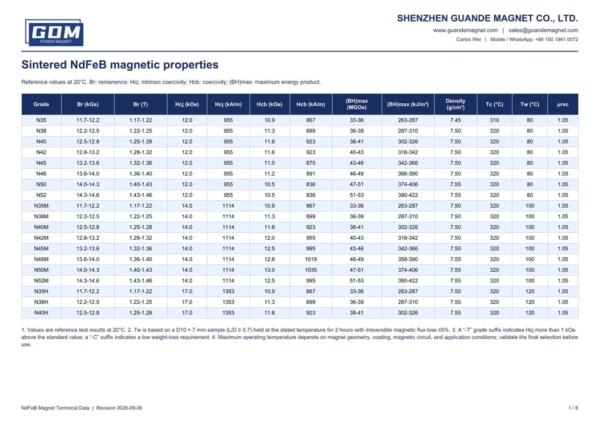
Sintered NdFeB Magnet Technical Data
Review grade properties, machining tolerances, coating options and conventional magnetization directions before finalizing your drawing or enquiry.
Revision: 2026-09-06 • PDF • 6 pages