
Magnetic Assemblies / Magnetic Filters
Magnetic Filters: Field Strength, Flow Path and Cleanable Separation
Magnetic filters use high-intensity magnetic rods, grids or housings to remove ferrous and weakly magnetic contamination from powders and liquids. Effective design connects surface field, gradient, flow conditions, sanitation and cleaning access.
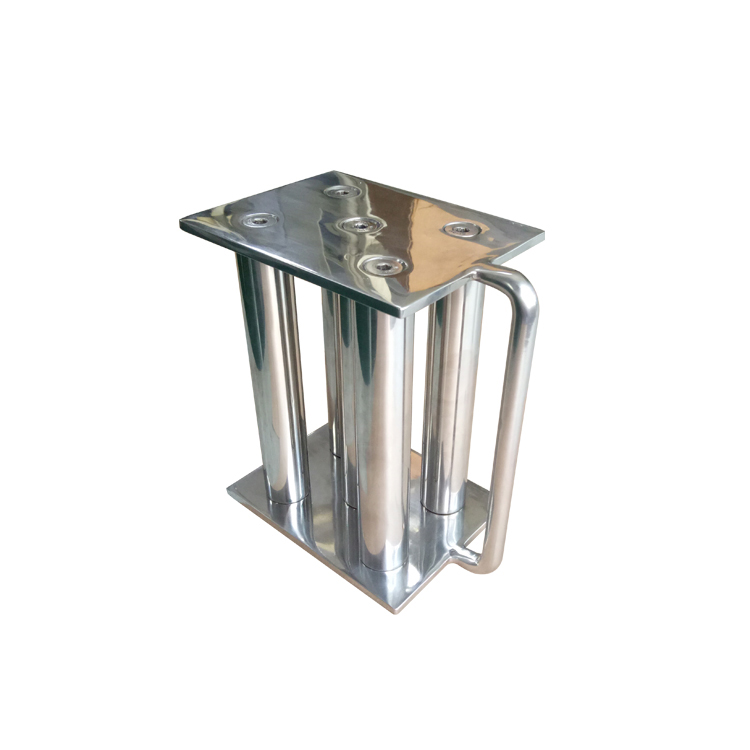
Geometry and Dimension Definition
Use functional datums and define the magnetization reference on the drawing. The table below provides the minimum geometry information for a practical manufacturing review.
| Parameter | How to define it | Why it matters |
|---|---|---|
| Rod diameter and length | Finished stainless tube dimensions | Controls magnetic surface area and installation fit |
| Grid spacing | Clear distance between magnetic elements | Balances capture probability and pressure drop |
| Housing connection | Flange, clamp, thread or custom frame | Defines cleanability and line integration |
| Working field specification | Surface flux density and measurement location | Creates a repeatable inspection reference |
Design Considerations
Field gradient matters
Particle capture depends on field gradient and residence path, not a single peak gauss number.
Product and flow behavior
Viscosity, particle size, temperature, flow rate and bridging tendency determine the best configuration.
Cleaning method
Manual wipe, easy-clean sleeves or automatic systems have different sanitation, downtime and magnetic-circuit requirements.
Manufacturing and Assembly Notes
- Thin stainless sleeves can be damaged by impact or abrasive product.
- High temperature may reduce magnetic output and affect seals.
- Excessive rod spacing leaves low-capture flow paths.
- A surface reading without probe method and location is not a complete acceptance standard.
Typical Applications
Food and ingredients
Hygienic grids and traps for dry or liquid processing.
Chemical processing
Corrosion-aware separation from powders and fluids.
Coolant and machining
Removal of fine ferrous wear debris.
Plastics and recycling
Protection of downstream equipment and product quality.
Engineering Questions
Is 12,000 gauss always better than 8,000 gauss?
Not necessarily. Gradient, coverage, temperature and flow path determine actual capture performance.
How should field strength be measured?
Define the probe, surface location, temperature and acceptance range so readings are repeatable.
When is an easy-clean design justified?
When contamination load, sanitation frequency or operator safety makes manual wiping inefficient.
Can magnetic filters remove stainless particles?
Some work-hardened or weakly magnetic stainless particles can be captured, but performance depends on alloy, size and gradient.
For a focused design review, share your drawing, operating temperature, air gap, target magnetic performance and annual volume through our enquiry page. You can also return to Magnetic Assemblies for material-level guidance.