
Magnetic Assemblies / Magnetic Fixtures
Magnetic Fixtures: Repeatable Location, Clamping and Release
Magnetic fixtures combine locating datums with a controlled magnetic clamp. The magnet should provide repeatable seating while hard stops, supports and mechanical features control position, reaction loads and process accuracy.
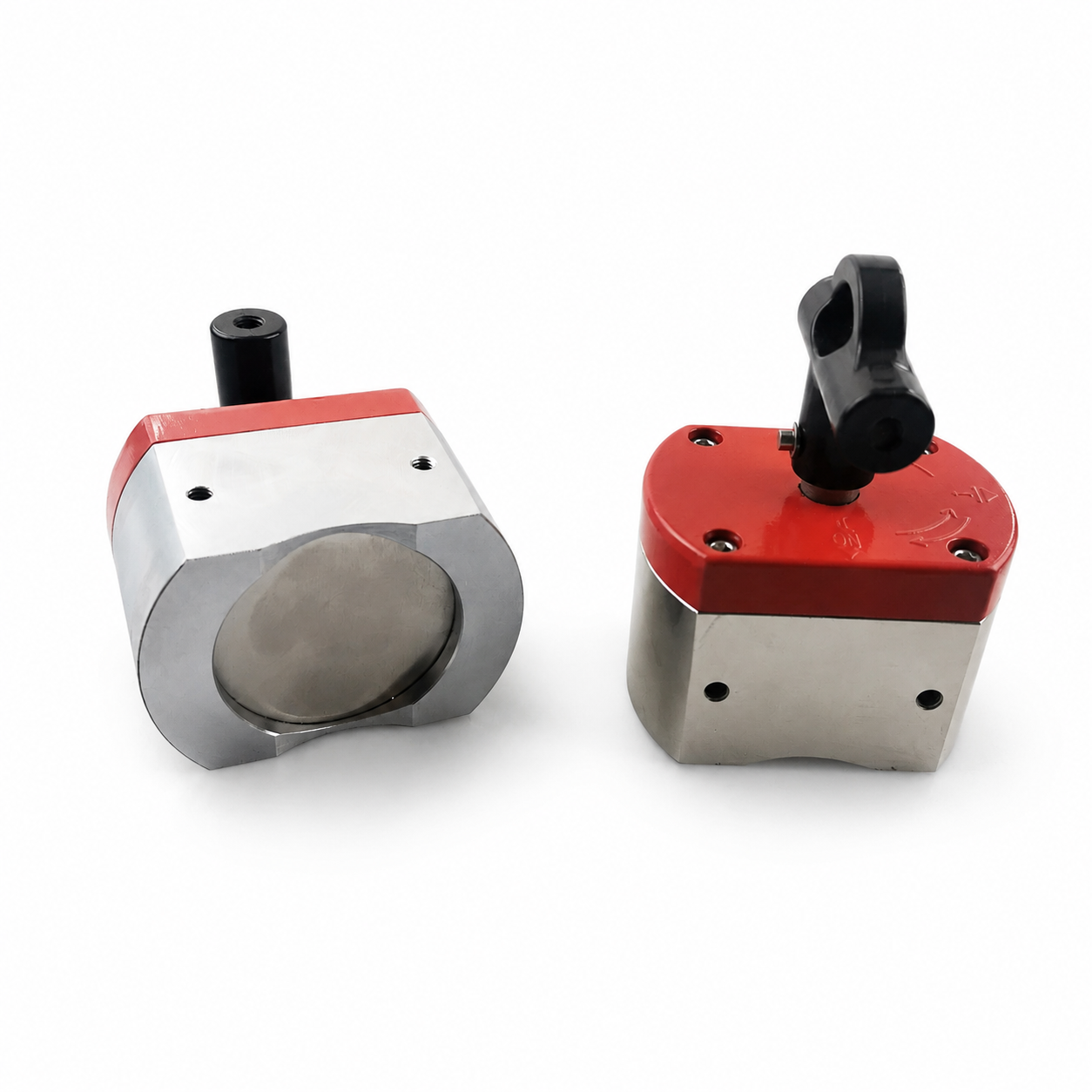
Geometry and Dimension Definition
Use functional datums and define the magnetization reference on the drawing. The table below provides the minimum geometry information for a practical manufacturing review.
| Parameter | How to define it | Why it matters |
|---|---|---|
| Base envelope | Length, width and height | Defines machine and workpiece clearance |
| Locating datums | Pins, rails, faces and stops | Control repeatable part position |
| Pole layout | Working-face size and spacing | Matches the workpiece load path |
| Release mechanism | Switch, lever, shunt or removable element | Defines cycle time and operator effort |
Design Considerations
Location versus clamping
Use physical datums for accuracy; magnetic force should seat the part against them.
Process loads
Cutting, welding, robot acceleration and cable forces may require stops beyond magnetic friction.
Chip and contamination control
Working faces need access for cleaning and inspection.
Manufacturing and Assembly Notes
- Swarf under the part causes angular and height error.
- Heat from welding can reduce force or damage adhesives.
- A workpiece may slide even when pull force appears adequate.
- Unexpected release can create a dropped-part hazard.
Typical Applications
Welding fixtures
Fast positioning of ferrous components.
Assembly nests
Repeatable seating for manual or robotic work.
Inspection gauges
Gentle, removable part retention.
Machining support
Supplementary clamping where hard stops carry cutting loads.
Engineering Questions
Can magnets replace all mechanical clamps?
Not always. Use hard stops and mechanical restraint for predictable side or safety-critical loads.
How is repeatability improved?
Define clean datums, controlled seating force and an inspection routine for the working face.
Are switchable fixtures preferable?
They improve loading and release where cycle time justifies the additional mechanism.
Can the fixture be used for welding?
Yes, if heat path, spatter, magnetic arc effects and thermal limits are reviewed.
For a focused design review, share your drawing, operating temperature, air gap, target magnetic performance and annual volume through our enquiry page. You can also return to Magnetic Assemblies for material-level guidance.