
Magnetic Assemblies / Magnetic Wheels
Magnetic Wheels: Adhesion, Rolling Torque and Surface Adaptation
Magnetic wheels combine a rotating magnetic circuit with a tread, hub and drive interface for climbing or traction on ferromagnetic surfaces. Adhesion must remain stable through rotation, curvature, seams and dynamic loading.
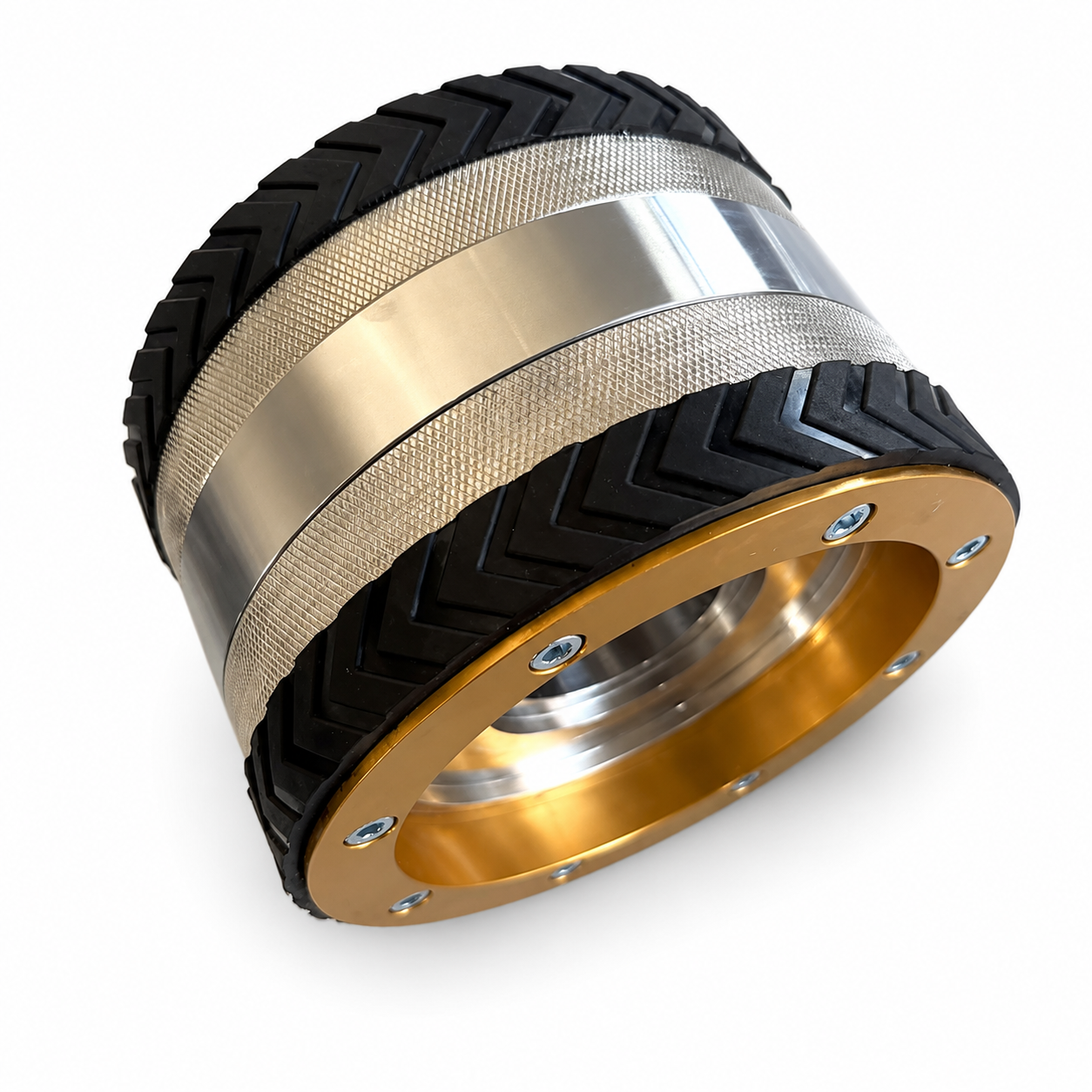
Geometry and Dimension Definition
Use functional datums and define the magnetization reference on the drawing. The table below provides the minimum geometry information for a practical manufacturing review.
| Parameter | How to define it | Why it matters |
|---|---|---|
| Wheel OD | Tread outside diameter | Controls obstacle clearance and drive torque |
| Wheel width | Axial contact and magnetic width | Influences stability and available attraction |
| Hub interface | Bore, key, spline or bolt pattern | Transfers motor torque |
| Tread thickness | Rubber or protective layer over the pole system | Balances grip, wear and magnetic air gap |
Design Considerations
Dynamic adhesion
Evaluate the minimum attached area during rolling, not only a stationary full-contact force.
Surface curvature and seams
Wheel geometry and pole pitch must tolerate welds, steps and curved structures.
Drive torque
Magnetic normal force increases traction but also rolling resistance and motor load.
Manufacturing and Assembly Notes
- Loss of power does not guarantee a controlled stop on every orientation.
- Debris accumulation changes the air gap and can damage the tread.
- Sharp curvature may reduce contact to a small region.
- Strong attraction increases bearing and drivetrain loads.
Typical Applications
Climbing robots
Inspection of tanks, ships and steel structures.
Pipeline inspection
Traction on ferromagnetic pipe surfaces.
Cleaning equipment
Stable movement on vertical steel panels.
Remote NDT platforms
Carrying sensors over large structures.
Engineering Questions
How is wheel adhesion calculated?
Use the magnetic circuit at the worst rolling contact, then apply dynamic and safety factors.
Why add a rubber tread?
It improves grip and protects the surface, but also increases the magnetic gap.
Can one wheel suit flat and curved surfaces?
Sometimes, within a defined curvature range. Pole geometry and tread compliance must be evaluated.
What happens at weld seams?
Momentary gap growth and impact can reduce force; the wheel and suspension should bridge the discontinuity.
For a focused design review, share your drawing, operating temperature, air gap, target magnetic performance and annual volume through our enquiry page. You can also return to Magnetic Assemblies for material-level guidance.