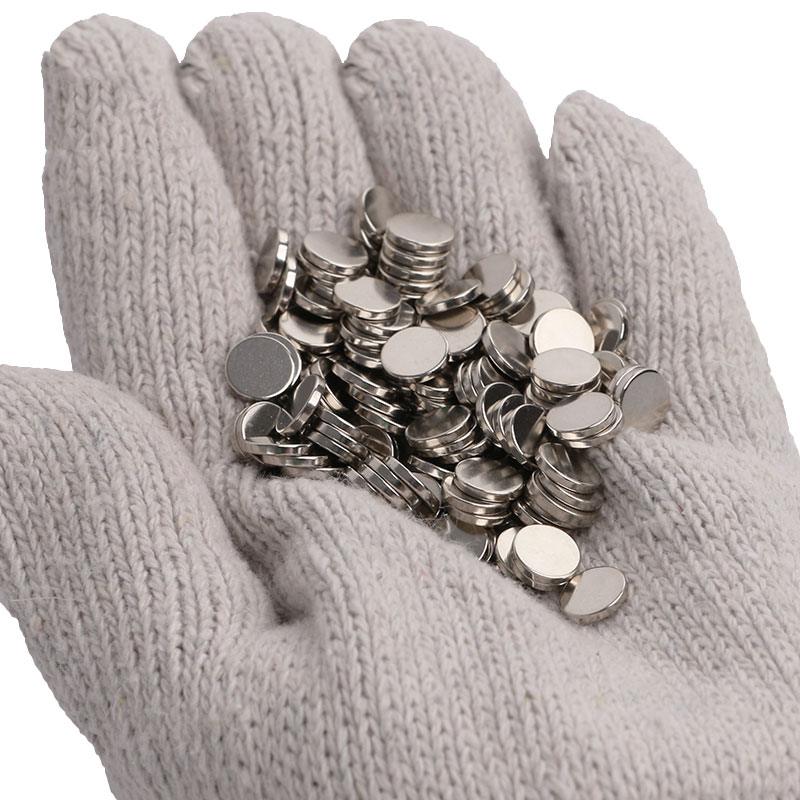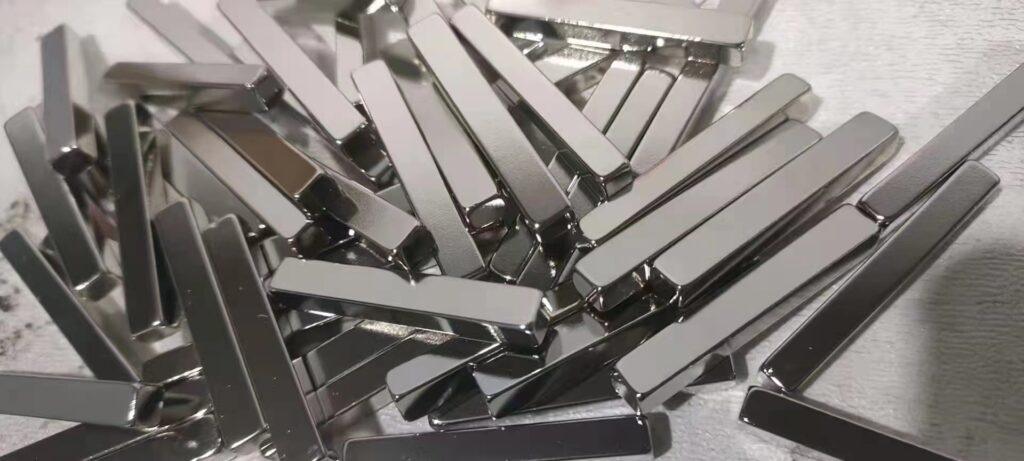
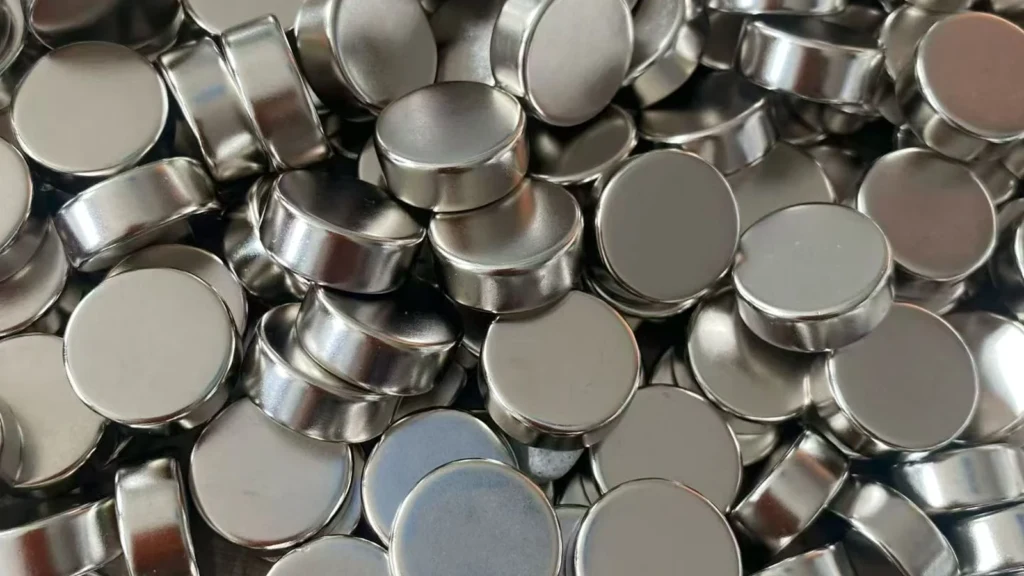
Cutting, centerless grinding, slicing and edge finishing of sintered NdFeB magnets generate fine particles mixed with water, grinding oil, abrasive wear and other process residues. This material is often called swarf, slurry or sludge. It looks like low-value waste, but NdFeB machining sludge recycling can recover concentrated neodymium, praseodymium and—depending on the processed grades—dysprosium, terbium, cobalt and iron.
Key distinction: sludge can be a valuable secondary resource, but its purchase value is not equal to the value of finished magnet alloy. Moisture, oxygen, oil, mixed grades, abrasive contamination, sampling uncertainty, treatment yield and compliance costs must be deducted.
Where the Sludge Comes From
Sintered blanks shrink during firing and must be sliced, ground and finished to final dimensions. Brittle NdFeB is machined with diamond or wire processes rather than conventional cutting. Fine magnetic particles are carried away by coolant so the tool and workpiece remain controlled.
Published reviews report that cutting and grinding can generate roughly 20–30 wt.% process scrap in conventional production, although the amount varies greatly with geometry, kerf, near-net pressing and yield. Grinding sludge is different from clean offcuts: its high surface area causes rapid oxidation, while coolant adds water, carbon and organic contamination.
Why the Material Is Valuable
| Value driver | Why it matters | Commercial limitation |
|---|---|---|
| High rare-earth concentration | Magnet alloy often contains around 30 wt.% rare-earth elements | Wet sludge includes liquids and nonmagnetic contamination |
| Critical Nd and Pr | Core elements for high-performance Nd2Fe14B magnets | Recovery and separation costs depend on chemistry |
| Dy/Tb in high-Hcj grades | Heavy rare earths can carry high strategic value | Content may be low, variable or absent in mixed sludge |
| Known industrial origin | Cleaner and more traceable than mixed end-of-life products | Multiple grades and coolants reduce consistency |
| Fine particle size | Can support rapid chemical reaction and leaching | Also increases oxidation, fire risk and handling difficulty |
| Continuous factory generation | Provides regular, collectable feedstock | Economic scale and licensed logistics are still required |
A 2020 open-access study reported more than 30 wt.% rare-earth elements in NdFeB scraps and demonstrated a route from centerless-grinding sludge back to magnet powder. The recovered material contained Nd, Pr, Gd, Dy, Ho and Co, showing why a well-segregated stream can be more than ordinary steel swarf.
Why Sludge Can Be More Attractive Than Ore
Rare-earth ore contains minerals that require mining, beneficiation, cracking and separation before magnet metals are produced. Factory sludge already originates from a refined magnet alloy, so the target elements can be far more concentrated. It is also generated at known industrial sites, which simplifies collection and traceability compared with dispersed end-of-life products.
This does not mean recovery is easy. NdFeB particles oxidize rapidly, rare-earth and iron phases must be separated, and oil or coolant must be removed safely. The advantage is concentration and origin—not the absence of processing.
What Determines the Actual Purchase Value?
| Measured factor | Effect on value | Recommended control |
|---|---|---|
| Moisture and oil | Reduce payable dry solids and add treatment cost | Representative moisture and loss-on-ignition test |
| Nd/Pr/Dy/Tb content | Defines recoverable rare-earth value | ICP/OES or XRF with validated sampling |
| Oxygen content | Changes direct-recycling feasibility and reduction demand | Controlled storage and oxygen analysis |
| Iron and abrasive contamination | Increases separation load and lowers product purity | Keep machine streams segregated |
| Mixed magnet grades | Creates variable chemistry | Record grade family, line and production period |
| Packaging and transport classification | Affects safety and logistics cost | Use sealed approved containers and licensed contractors |
| Recovery yield and product form | Controls saleable oxide, metal, alloy or powder output | Agree assay and settlement methodology |
The payable rare-earth mass should be calculated on a dry, sampled basis:
Payable REE = wet mass × dry-solids fraction × assayed REE fraction × recovery yield × commercial payable factor.
This formula explains why two visually similar drums can have very different value. A spot neodymium magnet scrap price without moisture, assay and settlement terms is not meaningful.
Main Recycling Routes
| Route | Basic process | Strength | Constraint |
|---|---|---|---|
| Hydrometallurgy | Pretreatment, acid leaching, separation and precipitation | Can selectively recover Nd, Pr, Dy and Tb | Reagent use, wastewater and iron separation |
| Pyrometallurgy | Roasting, smelting or slag/metal separation | Handles mixed or oxidized feed | High temperature and downstream refining |
| Reduction–diffusion | Reduce rare-earth oxides and reform magnet powder | Potential route back to Nd2Fe14B material | Oxygen, additives and composition control |
| Direct alloy recycling | Preserve alloy value and remake powder or magnets | Fewer separation steps for clean feed | Sludge oxidation and mixed chemistry make qualification harder |
The 2020 Engineering study used a calcium reduction–diffusion process and rare-earth-rich alloy addition to produce recycled magnets with a maximum energy product of 34.5 MGOe. This demonstrates technical potential, but every plant must evaluate economics, emissions, reagents, product purity and scale.
Why Segregation at the Factory Matters
Value is protected before the recycler arrives. Mixing NdFeB sludge with ferrite dust, stainless grinding debris, general machine waste or incompatible coolant increases sampling uncertainty and treatment cost. Mixing standard grades with Dy/Tb-containing high-temperature grades can also make the stream difficult to settle commercially.
- Separate NdFeB from ferrite, SmCo and general steel waste.
- Record production line, grade family, coolant and collection period.
- Use closed, compatible containers with controlled labels and weights.
- Prevent uncontrolled drying, ignition sources and dust release.
- Sample the stream using a written method before pricing.
- Use a qualified recycler and retain transfer and assay documents.
Safety and Environmental Compliance
Fine NdFeB particles are reactive. Dry powder can oxidize rapidly and may present fire or combustible-dust hazards. Wet sludge can contain oil, additives and metal fines that affect waste classification. Informal drying, burning or acid treatment creates unacceptable safety and environmental risks.
The correct classification depends on local law, coolant chemistry and analytical results. Storage, transport, wastewater, emissions and worker exposure should be managed by qualified personnel and licensed contractors. A high theoretical metal value never removes these obligations.
Market Direction
The IEA’s 2026 critical-minerals outlook expects secondary supply to make a larger contribution through 2040 and identifies rare-earth magnet recycling as an area that can benefit from growing volumes. Manufacturing scrap is available earlier and is easier to collect than end-of-life magnets from vehicles and turbines, so in-plant sludge remains strategically important.
Value will remain sensitive to NdPr and heavy-rare-earth prices, recovery yield, environmental cost and demand for recycled content. Plants with stable segregation and traceable data are better positioned than sellers who treat all black sludge as one commodity.
Guande Production and Traceability Approach
Guande’s sintered NdFeB magnet workflow includes material identification, precision machining, coating, magnetization and inspection. Our article on the NdFeB production process explains where machining and finishing occur.
For customer projects, yield begins with manufacturable geometry. Kerf allowance, tolerance, chamfer, near-net blank size and batch planning can reduce the amount of alloy sent to grinding, including on volume custom block magnet programs. Material efficiency and controlled recycling should be designed together rather than treated as an end-of-pipe issue.
References
- Engineering: recycling NdFeB grinding sludge into sintered magnets
- IEA Global Critical Minerals Outlook 2026
- Journal of Environmental Management: selective REE recovery from NdFeB sludge
Send Guande the magnet drawing, grade, tolerances and annual volume for a manufacturability and material-utilization review. Scrap purchasing and waste treatment should be handled separately through qualified licensed recyclers.