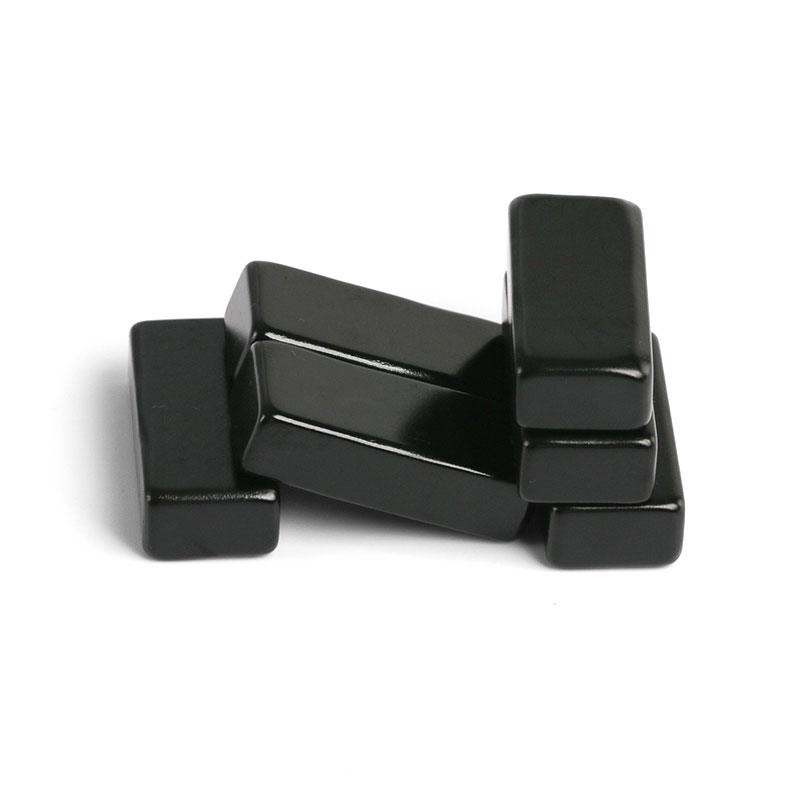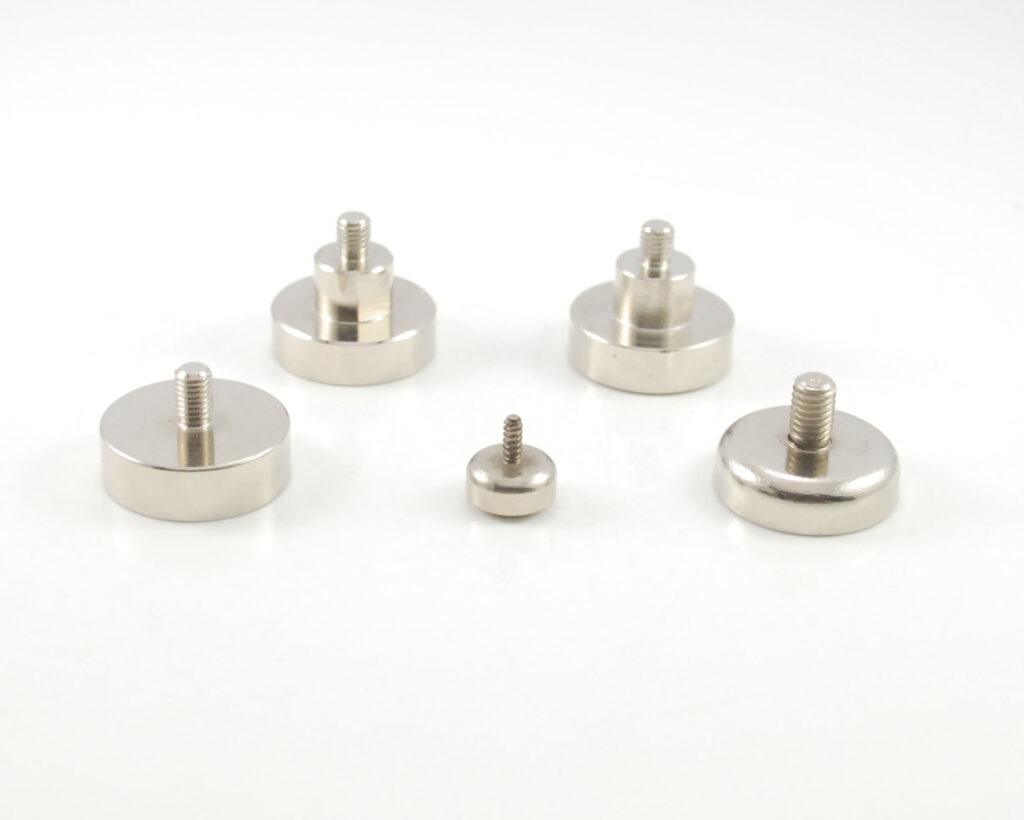
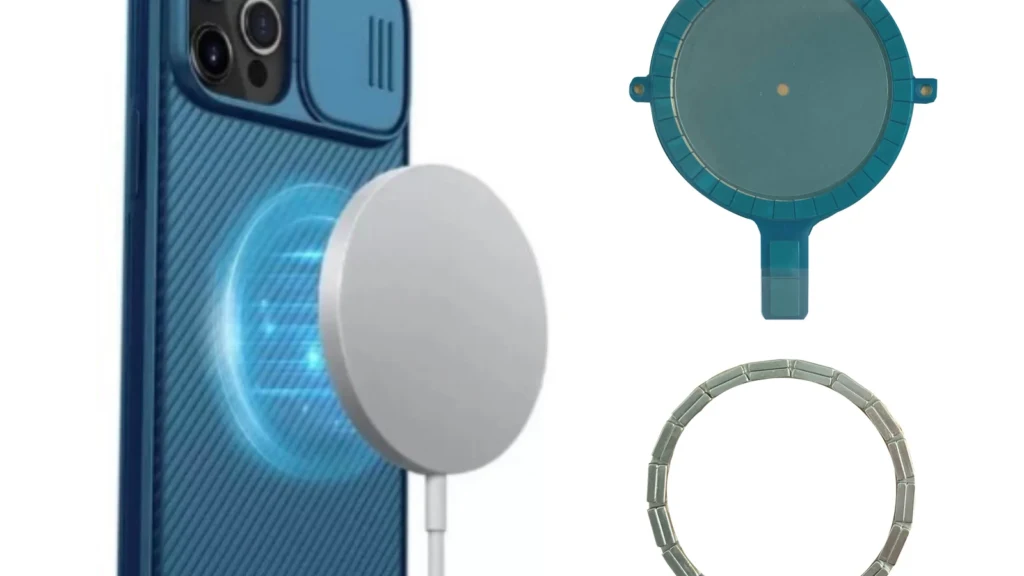
MagSafe magnet ring design solves a practical wireless-power problem: transmitter and receiver coils work best when they are concentric and close together, but users rarely place a phone perfectly by hand. A thin permanent-magnet array makes the device self-center, maintains the position during charging, and creates a repeatable mechanical interface for chargers, stands, power banks, cases, wallets, and vehicle mounts.
Engineering distinction: the permanent magnets do not transmit charging power. Inductive coils transfer energy; the magnet array aligns, retains, and orients the two products. Magnetic force must be sufficient for reliable use, but “maximum pull” is not the correct design target.
Why Apple and Other Electronics Brands Use Magnetic Charging
Apple introduced MagSafe on iPhone 12 in October 2020. The company described an array of magnets around the charging coil that improves alignment and supports charging up to 15 W. Current iPhone models support faster magnetic charging under defined adapter and thermal conditions. The user benefit is obvious—a charger snaps into the intended position—but the engineering reasons are more specific:
- Repeatable coil alignment: reduced lateral offset improves coupling consistency and limits avoidable heat.
- Stable air gap: the charger remains seated despite cable force or small movements.
- One mechanical interface: chargers, stands, batteries, grips, wallets, and mounts can share a predictable attachment geometry.
- Fewer failed charging attempts: magnetic positioning is easier to understand than finding an invisible coil center.
- Standardization: the Wireless Power Consortium’s Qi2 Magnetic Power Profile is based on technology contributed by Apple, allowing the alignment concept to extend beyond one phone brand.
Apple is expanding magnetic charging across parts of its ecosystem, but there is no public Apple roadmap stating that one identical MagSafe ring will be installed in every product. AirPods charging cases can use MagSafe or Qi chargers; Apple Watch uses a different magnetic charging architecture; MacBook uses a wired MagSafe 3 connector; and iPad remains USB-C based. The defensible direction is broader magnetic alignment where product geometry, power, temperature, and user behavior support it—not one ring geometry everywhere.
Adoption Timeline: From iPhone Feature to Qi2 Ecosystem
| Date | Market event | Engineering significance |
|---|---|---|
| October 2020 | iPhone 12 introduces MagSafe charging up to 15 W | Magnetic alignment becomes a mass-market phone interface |
| April–November 2023 | Qi2 Magnetic Power Profile is introduced and first products complete certification | Apple-contributed alignment technology becomes an industry standard |
| July 2024 | HMD Skyline launches with native magnetic Qi2 charging | Early Android implementation without relying only on a magnetic case |
| January 2025 | WPC reports more than 1,100 Qi2 products certified in one year | Accessory and transmitter ecosystem scales rapidly |
| July 2025 | Qi2 25W certification launches | Higher power raises thermal, alignment, and interoperability demands |
| August 2025 | Google Pixel 10 series launches with built-in Pixelsnap/Qi2 support | Native magnetic Qi2 reaches a major Android product family |
The follow-up has not been perfectly uniform. Some 3C brands first used magnetic cases or “Qi2 Ready” accessories rather than integrating magnets in the phone. That route lowers handset redesign risk, while native rings provide the most consistent alignment. The market is therefore moving through both integrated and case-assisted designs.
Is the MagSafe and Qi2 Market Growing or Shrinking?
The available evidence points to growth. The Wireless Power Consortium reported in January 2025 that more than 1,100 new Qi2 products had been certified in one year—six times faster than the preceding Qi version—and that more than 1.5 billion devices could benefit from Qi2. In July 2025 it launched Qi2 25W with 14 devices initially certified and several hundred more in the certification queue.
There is no authoritative public market total that isolates only the small permanent-magnet rings used in MagSafe-compatible products. Broader wireless-charging forecasts are more useful as directional context. IMARC estimated the global wireless-charging market at USD 22.2 billion in 2025 and forecast USD 55.7 billion by 2034, a 10.46% compound annual growth rate. This is an analyst forecast, not a MagSafe-only revenue figure.
| Signal | What it indicates | What it does not prove |
|---|---|---|
| Qi2 certifications | Rapid increase in compatible products | Exact magnet-ring revenue |
| Qi2 25W rollout | Standard is evolving toward higher power | Every device will use identical hardware |
| Major Android adoption | Demand is broadening beyond iPhone accessories | All Android models will integrate magnets immediately |
| Wireless-charging forecast | Overall category remains on a growth path | Guaranteed sales for any individual supplier |
Unit prices for mature ring assemblies may decrease as designs standardize and automation improves. That is not market contraction; it is typical scale economics. Volume, quality consistency, thinner assemblies, recycled-material requirements, and product-specific force tuning will matter more than selling the highest magnet grade.
How a MagSafe-Style Ring Works
The charging system contains a transmitter coil, a receiver coil, ferrite flux-management layers, electronics, and mechanical packaging. Around the coil, a ring of thin magnet segments creates a centering field. A lower alignment or “key” magnet can establish angular orientation for wallets, stands, and other accessories.
When mating arrays approach, the pole pattern produces lateral restoring force that guides the parts toward alignment. The final holding force depends on magnet dimensions and grade, pole layout, backing steel, adhesive and housing thickness, mating structure, temperature, and the complete air-gap stack. A case wall or decorative layer only fractions of a millimeter thicker can materially change force.
Apple’s current technical specifications list a magnet array, alignment magnet, accessory-identification NFC, and magnetometer in its MagSafe system. Generic Qi2 products should be designed to the applicable WPC specification and certification requirements; those Apple-specific components should not be assumed to be mandatory in every third-party assembly.
NdFeB Magnet Requirements
Segmented rings commonly use sintered NdFeB magnets because they provide useful force in a thin envelope. Selection must balance remanence, intrinsic coercivity, temperature, corrosion protection, process yield, and cost.
| Requirement | Why it matters | Practical control |
|---|---|---|
| Magnetic grade | Controls available field and thermal margin | Select Br and Hcj from the actual operating point, not surface field alone |
| Magnetization direction | A reversed segment creates a local weak or repelling area | Define a pole map and verify every segment before placement |
| Dimensional consistency | Changes ring diameter, pitch, coplanarity, and gap | Control critical thickness, arc angle, datum, and burr/chip limits |
| Coating and cleanliness | Influence corrosion and adhesive bond | Match Ni-Cu-Ni, epoxy, passivation, or another system to the environment and adhesive |
| Force distribution | Peak force alone does not ensure smooth self-centering | Measure pull, lateral restoring force, rotation torque, and field map |
| Temperature stability | Charging heat reduces magnetic output and adhesive strength | Validate at worst-case device and vehicle-interior temperatures |
A neodymium magnet grade should not be upgraded automatically. Higher remanence can increase force, but an appropriate high-coercivity grade may be safer when the ring sits near coils, steel, or opposing fields. The correct result is a controlled attachment and removal curve across the full tolerance range.
How Automated Assembly Changes Cost
A ring may contain many small, brittle, already magnetized segments. Manual assembly is flexible for prototypes, but handling attraction, polarity, adhesive volume, and angular pitch makes consistency difficult at scale. Automation transfers cost from direct labor and rework into fixtures, feeding, vision, and process development.
- Tray or feeder presents parts in a controlled orientation.
- A polarity sensor and camera confirm segment type, face, and angle.
- Metered adhesive is dispensed into a carrier or housing.
- Pick-and-place tooling installs segments while controlling magnetic interaction.
- A fixture maintains diameter, pitch, and flatness during UV or thermal cure.
- Vision, magnetic mapping, pull/torque testing, and electrical charging checks release the assembly.
| Production route | Best fit | Cost behavior | Main risk |
|---|---|---|---|
| Manual fixture assembly | Engineering samples and low volume | Low tooling cost, high labor per ring | Polarity and placement variation |
| Semi-automatic | Medium volume or changing designs | Moderate tooling with flexible labor content | Process handoffs and operator dependence |
| Fully automatic line | Stable high-volume product | High initial investment, lower repeat labor and rework | Tooling becomes uneconomic if geometry changes frequently |
Pre-magnetized assembly allows each segment to be polarity-checked and works well with vision-guided placement, but it requires nonmagnetic tooling and careful collision control. Magnetizing after assembly can simplify handling, yet the complete ring, carrier, and nearby components must tolerate the pulse and the magnetizing fixture must generate the required multipole pattern. The decision should be made during design-for-manufacturing review.
Applications Beyond a Charging Puck
Qi2 magnetic wireless charging now supports phones, cases, charging stands, power banks, vehicle mounts, desk docks, camera grips, gaming accessories, smart-home docks, and selected wearable or XR products. In some products the same ring only provides attachment; in others it must align a charging coil and pass certification. These are different engineering responsibilities.
System designers must also consider heat, foreign-object detection, steel and ferrite saturation, compass and camera interactions, NFC/RFID performance, medical-device guidance, drop shock, adhesive creep, corrosion, and field exposure outside the device. Testing only a bare MagSafe ring assembly on a thick steel plate is not representative of the final product.
Guande Design, Assembly, and Inspection Support
Guande supports custom magnetic assemblies from pole-map review and grade selection through arc-segment machining, coating, automated-assembly fixture planning, adhesive control, magnetization, and inspection. We can evaluate force-versus-gap, lateral centering force, rotation torque, field uniformity, temperature aging, dimensional stack-up, and functional fit with the customer’s charger or accessory.
For an efficient review, provide the ring geometry, mating product, pole map, maximum device temperature, coating and adhesive requirements, force target at the real gap, removal-force limit, annual volume, and certification route. If these inputs are not fixed, a prototype DOE can identify the useful range before production tooling.
Official and Market References
- Apple: iPhone 12 and the introduction of MagSafe
- Wireless Power Consortium: Qi2 certification rollout
- Wireless Power Consortium: 2025 Qi2 adoption update
- Google: Pixel 10 Pixelsnap and native Qi2 accessories
- IMARC/ResearchAndMarkets wireless-charging market estimate
Send Guande your ring drawing, pole map, working gap, force target, temperature, and annual volume for a practical design and assembly review.