
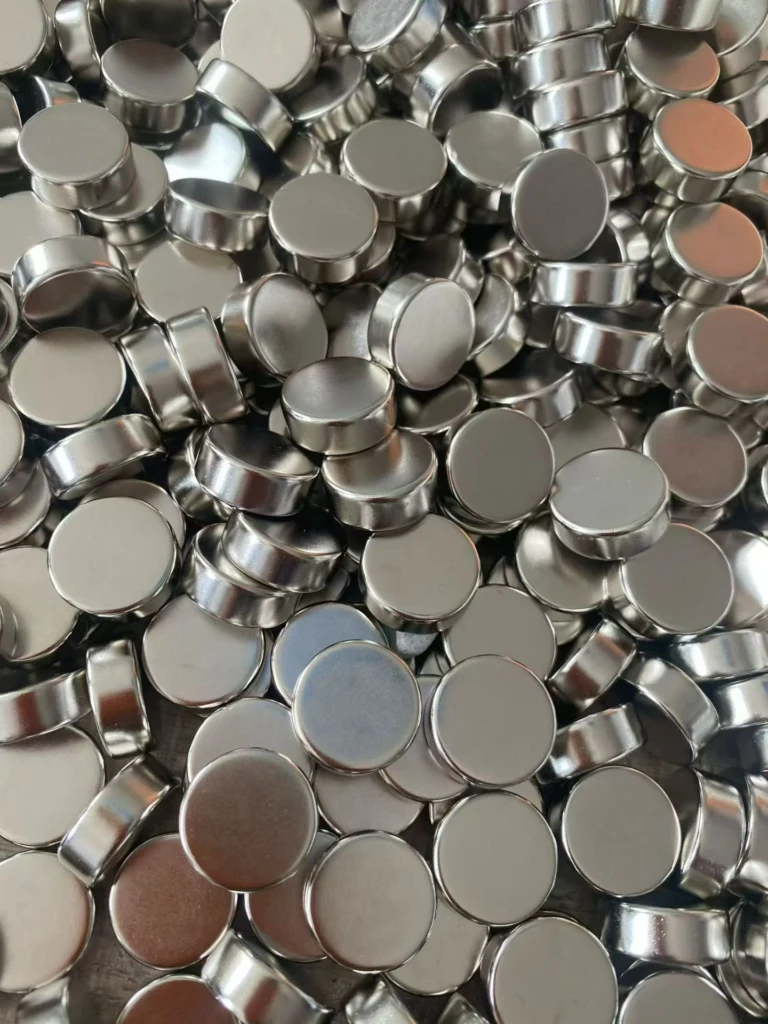
China’s rare-earth export-control system affects more than magnet manufacturers and overseas buyers. Freight forwarders, customs brokers, carriers, warehouses and express operators must now treat classification and license status as booking-critical data. The rare earth export controls are not a blanket ban on all permanent magnets. They create item-specific licensing, declaration and end-user controls that can stop a shipment when technical information is incomplete or inconsistent.
Operational point: the exporter remains responsible for item classification and license compliance; the forwarder must not carry or arrange a transaction that it knows violates export-control requirements.
Which Rules Matter to the Magnet Supply Chain?
On April 4, 2025, China’s Ministry of Commerce (MOFCOM) and General Administration of Customs issued Announcement No. 18 of 2025, controlling specified samarium, gadolinium, terbium, dysprosium, lutetium, scandium and yttrium-related items. It includes SmCo permanent-magnet material and specified NdFeB material containing controlled heavy rare-earth elements.
Later measures expanded controls over additional rare-earth items, equipment and technology. The current compliance review must therefore use the latest control list, product composition, form, technical parameters, end user and end use. The 2025 Announcement No. 57 also requires precise declaration language for controlled items and for non-controlled items whose parameters are close to listed thresholds.
For 2026, MOFCOM and Customs published the Export License Management Catalogue. Goods that are also dual-use controlled require the corresponding dual-use item and technology export license. Requirements can change, so each shipment needs a current check rather than reliance on an old successful declaration.
| Question before booking | Owner of source data | Why logistics needs it |
|---|---|---|
| Is the item controlled? | Exporter with technical/compliance review | Determines license and declaration path |
| What is the composition and product form? | Manufacturer and laboratory/traceability records | Supports control-code and customs description |
| Who are the consignee and end user? | Buyer/exporter | Needed for screening and license consistency |
| What is the final end use? | End user, documented through exporter | Affects licensing and risk review |
| Is the license valid for this shipment? | Exporter | Quantity, value, destination and validity must match |
Impact on Freight Forwarder Operations
The first change is timing. A forwarder should not confirm a non-refundable uplift or vessel plan until the exporter confirms whether a rare earth export license is required and, if so, that the approved document covers the booking. License review can extend lead time, so production completion is no longer the only “cargo ready” milestone.
The second change is data depth. Generic descriptions such as “metal parts,” “motor components” or “magnets” are insufficient for controlled-item screening. Commercial invoice, packing list, declaration elements, license, end-user documents and product specifications must be consistent. A discrepancy in grade, composition, quantity or destination can trigger customs questioning and prevent release.
| Logistics stage | New control point | Failure mode |
|---|---|---|
| Quotation | Ask whether cargo may be controlled and whether review is complete | Unrealistic transit promise |
| Booking | Match shipper, consignee, destination and cargo description | Carrier rejects or holds booking |
| Warehouse acceptance | Segregate lots and preserve package/document identity | Licensed and non-licensed goods are mixed |
| Customs declaration | Use correct control code and required remarks | Customs challenge and non-release |
| Transshipment | Screen route, parties and re-export obligations | Unexpected jurisdiction or diversion risk |
| Delivery evidence | Retain transport and consignee records | Weak audit trail |
Forwarders Are Not the Technical Classifier
A freight forwarder should not guess dysprosium or terbium content from an HS code, product photograph or grade label. Classification requires manufacturer data and legal/compliance judgment. The forwarder’s practical role is to request evidence, identify contradictions, stop processing when required documents are missing, and escalate the case to the exporter’s compliance contact.
MOFCOM’s 2025 technology-control announcement states that service providers must not knowingly provide intermediary, agency, freight, delivery, customs, platform or financial services for violations. In June 2026, MOFCOM Announcement No. 26 of 2026 further strengthened reporting mechanisms for suspected violations involving strategic-mineral dual-use items.
Air-Freight Magnet Rules Are a Separate Check
Export-control status and transport classification are different. A magnet may be non-controlled for rare-earth purposes yet require magnetic-field testing or shielding for air carriage. Conversely, a well-shielded package can still need an export license. The forwarder should keep the two decisions separate: trade-control authorization and carrier dangerous-goods/operator acceptance.
| Document/data set | Purpose | Consistency check |
|---|---|---|
| Product specification and composition | Control classification | Matches grade and invoice description |
| Export license, when required | Legal authorization | Parties, item, quantity, value and destination |
| End-user/end-use statement | Licensing and screening | Consistent with buyer and shipment route |
| Invoice and packing list | Commercial/customs declaration | Lot, quantity, net weight and description |
| Magnetic-field test/shielding record | Air-carrier acceptance where applicable | Applies to final packed configuration |
Effects on Cost, Lead Time and Routing
The permanent magnet supply chain must allow more time for technical classification, end-user documents, license processing and customs review. Forwarders may incur storage, rebooking or amendment costs when authorization arrives after production. Consolidation becomes harder if one controlled lot delays an entire mixed shipment. Direct routes and stable service providers can reduce handoffs and document inconsistency.
The better response is not to add arbitrary buffer everywhere. Use a compliance gate before production release, a booking gate before freight commitment and a document gate before customs submission. Maintain lot traceability so approved and non-controlled products cannot be mixed.
What Buyers and Exporters Should Provide
Provide the exact magnet material, composition where relevant, coating, dimensions, quantity, end user, end use and destination early. Avoid changing consignee or route after license issuance without a compliance review. For repeat business, keep version-controlled templates and re-check the current rules rather than copying an old declaration.
Our earlier guide, How China’s Rare-Earth Export Controls Affect the Permanent Magnet Supply Chain, covers procurement and engineering implications. The air-shipment article Can Neodymium Magnets Ship by Air? addresses packaging-field requirements.
Guande’s Practical Role
Guande supports traceable sintered NdFeB magnets and custom magnetic assemblies. We coordinate product descriptions, lot records, packing data and technical documents required for compliant trade. Regulatory classification and licensing remain subject to the current rules and competent authorities.
For a China magnet export project, send the drawing, grade, quantity, destination, consignee and end-use information through Get a Quote. We will identify the technical documentation needed before confirming the production and logistics plan.