A magnetic coupling transmits torque from a driving shaft to a driven shaft through magnetic attraction and repulsion instead of direct mechanical contact. In a sealed pump, mixer, or vacuum device, this allows the motor to remain outside a containment wall while the driven rotor operates inside the process environment.
Core benefit: a magnetic coupling can eliminate a dynamic shaft seal. This can reduce leakage risk, isolate hazardous or high-purity media, and simplify maintenance when the coupling is correctly designed for torque, temperature, speed, pressure, and alignment.
Magnetic Coupling Working Principle
A typical permanent magnetic coupling has an outer driver rotor and an inner driven rotor. Each rotor carries a pattern of alternating magnetic poles. When the motor turns the driver, its rotating magnetic field pulls the poles of the driven rotor into alignment. The driven rotor follows at the same average speed while torque passes across an air gap and, in sealed equipment, through a stationary containment shell.
The rotors do not need to touch. Under normal synchronous operation, their pole patterns maintain a small angular displacement called the torque angle. As load increases, this angle increases and the coupling transmits more torque up to its design limit. If the load exceeds the pull-out torque, the rotors can lose synchronization. This behavior can offer overload protection, but repeated decoupling may generate heat and must not be treated as a substitute for proper controls.
Main Components of a Magnetic Coupling
- Driver rotor: connects to the motor and produces the rotating field.
- Driven rotor: connects to the pump impeller, mixer, encoder, or other load.
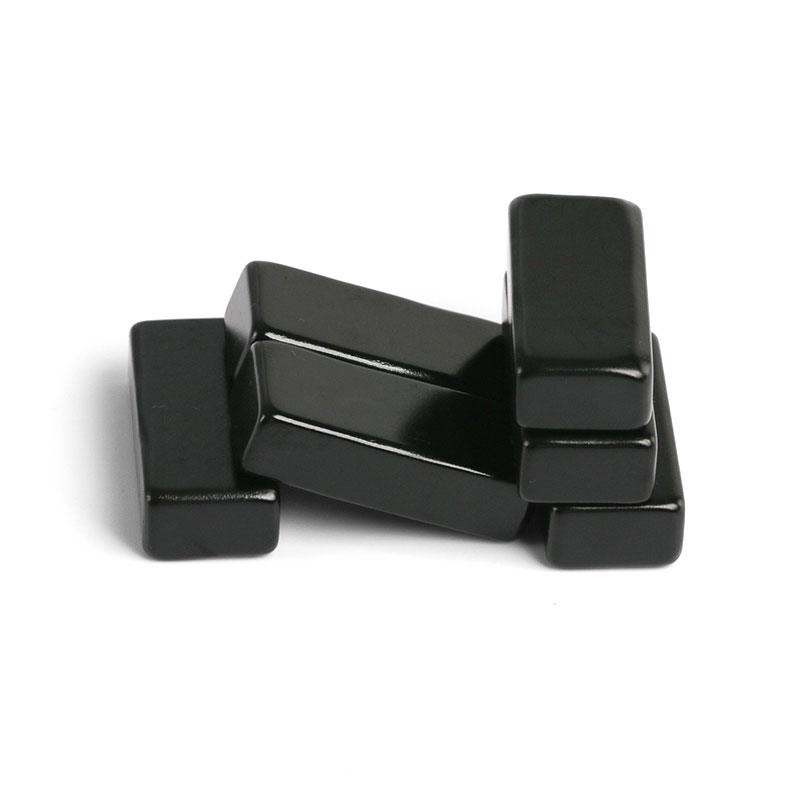
- Permanent magnets: commonly NdFeB for compact high torque or SmCo for higher temperature and stability.
- Back iron or yoke: completes the magnetic circuit and increases useful flux in the working gap.
- Containment shell: creates the static pressure or process barrier in hermetic designs.
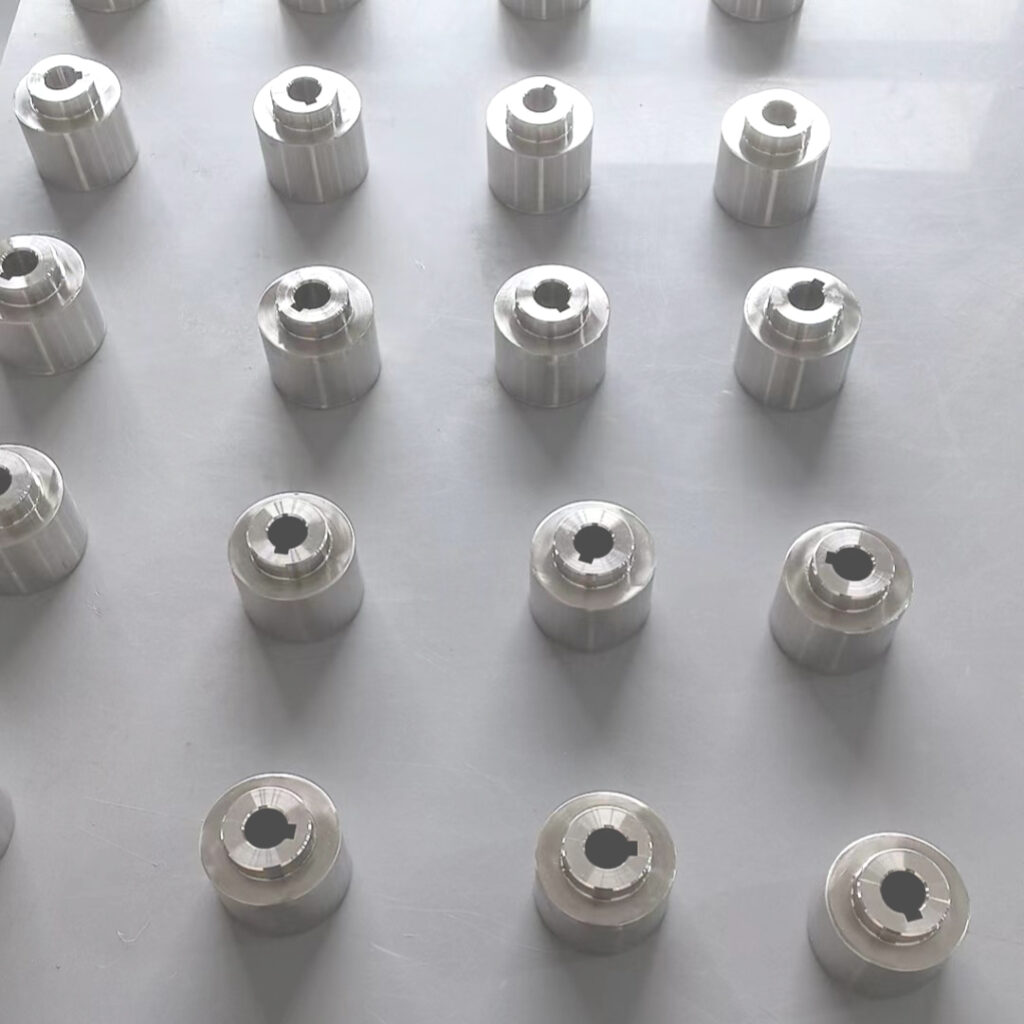
- Hubs, sleeves, adhesive, and retainers: locate the magnets and resist centrifugal, thermal, and torque loads.
- Bearings and housing: control alignment and support the driven equipment.
Our magnetic coupling product page shows how the magnetic components can be integrated into application-specific rotor and housing designs.
Main Types of Magnetic Couplings
Coaxial radial magnetic couplings
Concentric inner and outer rotors use radially arranged poles. This format is common in sealed pumps and mixers because it places the containment shell between two cylindrical rotors and can provide high torque in a compact diameter.
Axial or face magnetic couplings
Two disc-like rotors face each other across an axial gap. They are simple to integrate when shafts are separated by a wall or plate and can also function as noncontact torque limiters. Axial force and bearing load must be considered carefully.
Linear magnetic couplings
Magnet arrays transfer motion through a tube or flat barrier in linear actuators, dosing devices, and special handling systems. Stroke, lateral guidance, and end-stop behavior are important design variables.
Eddy-current couplings
An eddy-current coupling uses a moving magnetic field to induce current in a conductive rotor. Unlike a synchronous permanent magnetic coupling, it requires slip to develop torque. It is useful for soft starting, controlled speed difference, and noncontact braking, but it also generates heat in the conductive member.
What Determines Transmitted Torque?
Torque depends on the complete magnetic circuit, not on magnet grade alone. Important factors include rotor diameter and active length, pole count, magnet thickness, magnetization direction, working gap, containment-shell thickness, back-iron saturation, temperature, and the relative angular position of the rotors.
A larger gap normally reduces torque rapidly. This makes the shell material and thickness critical. An electrically conductive metallic shell can also develop eddy-current heating at speed. High-resistivity alloys, engineered slots, or nonmetallic containment materials may reduce loss, provided pressure, chemical, and regulatory requirements are satisfied.
Finite-element analysis is often used to compare pole count, magnet arc, yoke thickness, and air gap. Prototype torque testing should then confirm pull-out torque, temperature rise, axial and radial forces, and performance under realistic alignment and speed.
Where Magnetic Couplings Are Used
- Chemical pumps: isolate corrosive, toxic, volatile, or valuable fluids without a rotating seal.
- Pharmaceutical and food processing: support hygienic containment and reduce contamination paths.
- Vacuum equipment: transmit rotary motion through a vacuum wall without a shaft feedthrough.
- Mixers and agitators: drive impellers inside sealed vessels, bioreactors, or pressure systems.
- Underwater and subsea equipment: isolate motors and electronics from the external environment.
- Torque limiters: allow controlled decoupling when a machine jams.
- Encoders and instruments: transfer low-torque motion across a clean, sterile, or pressure boundary.
Design Limitations Engineers Must Check
Magnetic couplings are not automatically maintenance-free. Bearings still require appropriate selection, alignment must remain within limits, and the containment shell must withstand pressure, fatigue, corrosion, and cleaning chemistry. Metal particles near the magnetic gap can increase drag or damage surfaces.
Temperature affects both magnet performance and adhesive or sleeve retention. Centrifugal force rises rapidly with speed. A rotor that is magnetically adequate at room temperature may not have sufficient demagnetization margin or mechanical retention at its maximum operating condition.
The system should also define safe behavior after decoupling. Continued driver rotation while the driven rotor is stalled can create oscillating fields, vibration, and heat. Sensors or motor-control logic may be needed to detect this state.
How to Select a Magnetic Coupling
- Define continuous, startup, peak, and jam torque rather than one nominal value.
- Specify speed, duty cycle, acceleration, and allowable temperature rise.
- Provide the working gap, containment material, shell thickness, and pressure requirement.
- Describe the process media, corrosion exposure, cleaning regime, and cleanliness standard.
- Set axial, radial, and angular misalignment limits with the bearing arrangement.
- Agree on pull-out torque, safety factor, magnetic inspection, balancing, and endurance tests.
Guande Design, Assembly and Inspection Capability
Guande supports magnet grade and magnetization selection, magnetic-circuit simulation, rotor geometry, back-iron and sleeve integration, adhesive bonding, magnet-to-metal assembly, and prototype validation. We can manufacture complete custom magnetic assemblies rather than supplying loose magnets when controlled air gaps, pole orientation, balance, and mechanical retention are essential.
Inspection can include dimensional checks, magnetization-direction verification, surface field or flux measurement, static torque and pull-out testing, concentricity, runout, dynamic balance, temperature-rise trials, and application-specific endurance testing. The appropriate plan is chosen around the coupling’s risk and production volume.
Frequently Asked Questions
Do magnetic couplings have zero slip?
Synchronous permanent magnetic couplings normally rotate at the same average speed below pull-out torque, although a load-dependent angular offset exists. Eddy-current couplings require speed difference to transmit torque.
Can a magnetic coupling work through stainless steel?
Yes, but alloy, thickness, conductivity, pressure, temperature, and speed affect torque and heat. The containment shell must be evaluated as part of the magnetic and mechanical system.
What happens if the coupling is overloaded?
The rotors can decouple after the maximum synchronous torque is exceeded. This may protect machinery, but repeated or prolonged decoupling can cause heat and vibration, so the drive should detect and manage it.
Send Guande your torque curve, speed, working gap, shell specification, temperature, and operating media for a magnetic coupling feasibility review.