
A magnetic filter grid—also called a magnetic grate or hopper magnet—is a group of stainless-steel magnetic tubes arranged across a product stream. As powder, granules, flakes or liquid passes around the tubes, ferrous particles are attracted to high-gradient zones on the tube surfaces and held until cleaning.
Key point: separation performance is not defined by a single surface-gauss number. It depends on magnetic gradient, tube spacing, product contact, flow behavior, contamination size, temperature, cleaning frequency and the magnetic response of the contaminant.
How Do Magnetic Filters Work?
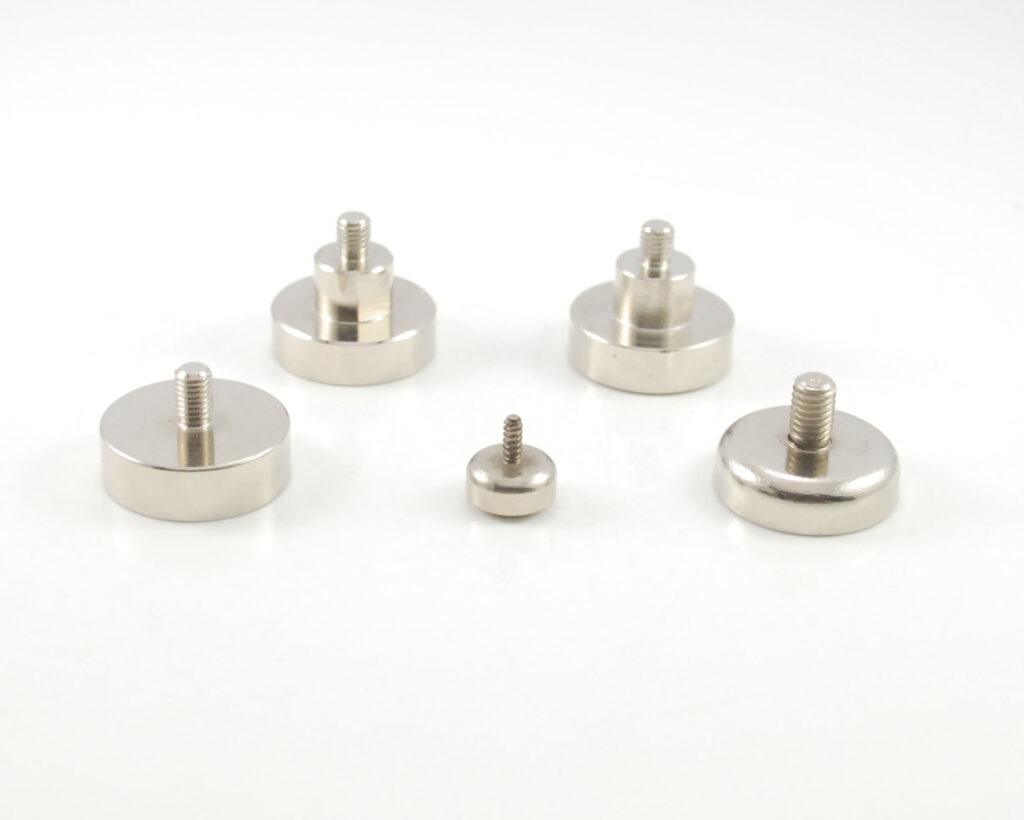
Each magnetic tube normally contains a stack of permanent magnets and steel pole pieces inside a sealed stainless-steel shell. Alternating poles concentrate magnetic flux at repeated rings along the tube. The magnetic force on a small particle increases with both field strength and field gradient, so the pole transitions are the most active capture zones.
When tubes are placed across the full cross-section of a chute or hopper, the flowing product must pass close to one or more capture surfaces. Multiple rows can be staggered so a particle cannot travel through a straight open channel.
Main Components of a Magnetic Grate Separator
| Component | Function | Design variable |
|---|---|---|
| Magnetic tube | Creates high-gradient capture zones | Diameter, circuit, surface field, temperature rating |
| Stainless shell | Provides a cleanable process-contact surface | 304/316L, wall thickness, polish, weld quality |
| Frame | Positions tubes and fits the chute or hopper | Shape, flange, seals, mechanical stiffness |
| Second row / staggered layer | Increases exposure and blocks straight paths | Row spacing, pressure drop, cleanability |
| Easy-clean sleeve or drawer | Allows captured metal to be released away from product | Operator access, seals, interlocks, residual field |
Why Tube Spacing Matters
A smaller gap between tubes places more of the product inside a useful capture distance. It can improve fine-particle interception but also restrict flow, bridge cohesive powder and increase cleaning frequency. A larger gap improves throughput but leaves a wider low-field path.
| Product behavior | Useful grid approach | Risk to manage |
|---|---|---|
| Free-flowing granules | Single or staggered grate with moderate spacing | High velocity and bounce |
| Fine cohesive powder | Carefully spaced polished tubes, possible vibration | Bridging and buildup |
| Large flakes or pellets | Larger clear opening and robust frame | Impact and blockage |
| Viscous liquid or slurry | Streamlined grid or removable filter housing | Pressure loss and cleaning access |
What Contaminants Can Be Captured?
Magnetic grids are effective for iron and carbon-steel fragments such as wire, scale, weld debris, fastener wear and fine machining particles. Some work-hardened stainless-steel particles can become weakly magnetic and may be captured at close range, but a grid cannot be assumed to remove all stainless steel, aluminum, copper, stone or glass.
Particle shape matters. A long steel splinter may bridge to a tube easily, while a small spherical particle moving quickly through a thick product bed may need a stronger gradient and more contact opportunities.
Common Use Scenarios
| Industry | Typical material | Installation point |
|---|---|---|
| Food processing | Flour, sugar, starch, spices, grains | Hopper outlet, chute, before mill or packaging |
| Plastics | Resin pellets, regrind, additives | Dryer, blender, extruder feed throat |
| Chemical | Pigments, powders, granules | Transfer chute or bag-dump station |
| Pharmaceutical | Qualified powders and ingredients | Controlled transfer step with validated cleaning |
| Ceramics and minerals | Powder, sand, glaze ingredients | Before sensitive process equipment |
| Liquid processing | Oil, coolant, syrup or slurry | Housing or low-velocity bypass section |
Magnetic Filter for Powder Versus Liquid
A magnetic filter for powder is usually designed around gravity flow, bridging tendency and dry cleaning. A magnetic filter for liquid must also account for viscosity, pressure drop, seal compatibility, corrosion and a safe drain or isolation method. The same tube circuit can behave differently because fluid drag and residence time change the particle trajectory.
Surface Field, Gradient and Temperature
Surface field should be measured at defined positions with a specified Hall probe. A peak reading at one pole transition is useful for production control, but it does not describe the whole flow path. Mapping several positions and verifying magnetic pull with a standard test piece can provide a more meaningful acceptance plan.
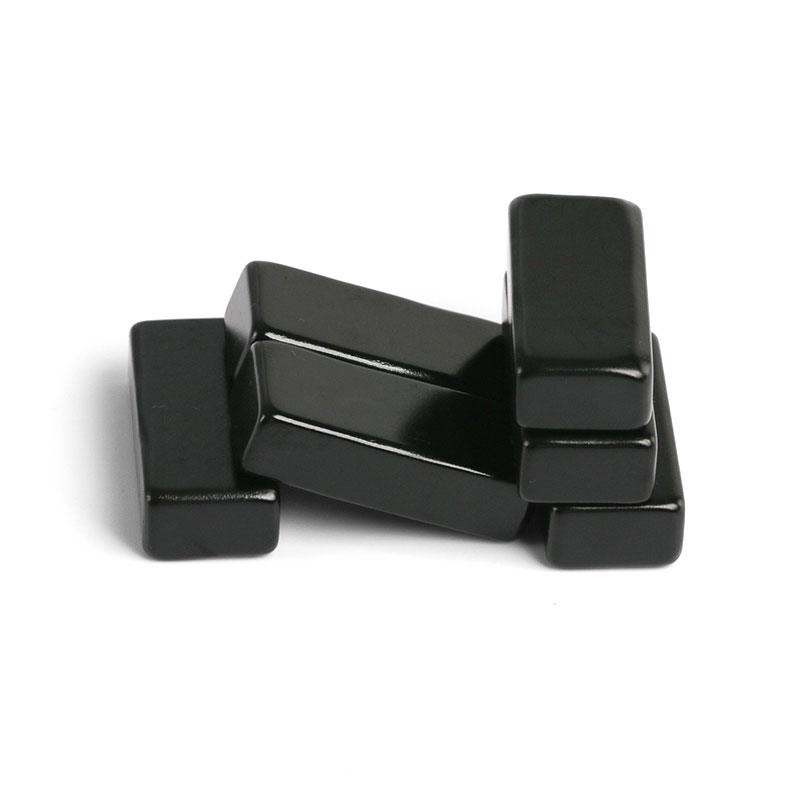
NdFeB circuits provide high field in compact tubes. Ferrite or high-temperature NdFeB may be selected when process temperature is higher. The real temperature limit includes the internal magnet grade, tube construction, weld heat, cleaning temperature and expected irreversible loss.
How to Clean a Magnetic Filter
- Stop and isolate product flow using the plant’s approved lockout procedure.
- Remove the grate or drawer without dragging captured metal back into the clean stream.
- Move it to a designated collection area.
- Wipe or wash the tubes using a process-compatible method, or withdraw easy-clean magnetic cores from sleeves.
- Inspect for dents, cracks, weld damage and trapped residue.
- Record contamination if the system is part of HACCP, quality or preventive-maintenance control.
- Reinstall with the correct gasket and orientation before restarting flow.
Cleaning interval should be based on contamination load, not convenience. A thick captured layer can shield the field and release particles if the product strikes it.
Selection Checklist
- Product type, bulk density, particle size and flow rate.
- Chute dimensions and acceptable pressure drop or bridging risk.
- Expected contaminant material and minimum target size.
- Operating, cleaning and sterilization temperature.
- Stainless grade, surface finish and sanitary requirements.
- Manual, drawer-style or easy-clean configuration.
- Field mapping, pull test and documentation requirements.
Guande Magnetic Filter Capability
Guande designs magnetic tubes, grids and custom magnetic separator assemblies around the real product path. We support magnetic-circuit selection, tube and frame dimensions, stainless material, welding, polishing, leakage inspection, field mapping and pull-force testing. Our custom magnetic assembly workflow also covers mounting interfaces and cleanability.
For high-energy tube circuits, we select and inspect sintered NdFeB magnets before assembly. Send the chute drawing, product, flow rate, temperature and cleaning method for a practical grid proposal.
Frequently Asked Questions
Can a magnetic grid guarantee zero metal contamination?
No. It is one control step. Performance depends on exposure, maintenance and contaminant properties, and it should be combined with upstream controls and downstream detection where required.
Is the highest surface gauss always best?
No. Gradient, active area, spacing, tube wall, product distance and temperature are equally important.
When should a double-row grid be used?
Use it when one row leaves unacceptable straight-through paths or when fine contamination needs more exposure, provided flow and cleaning remain practical.